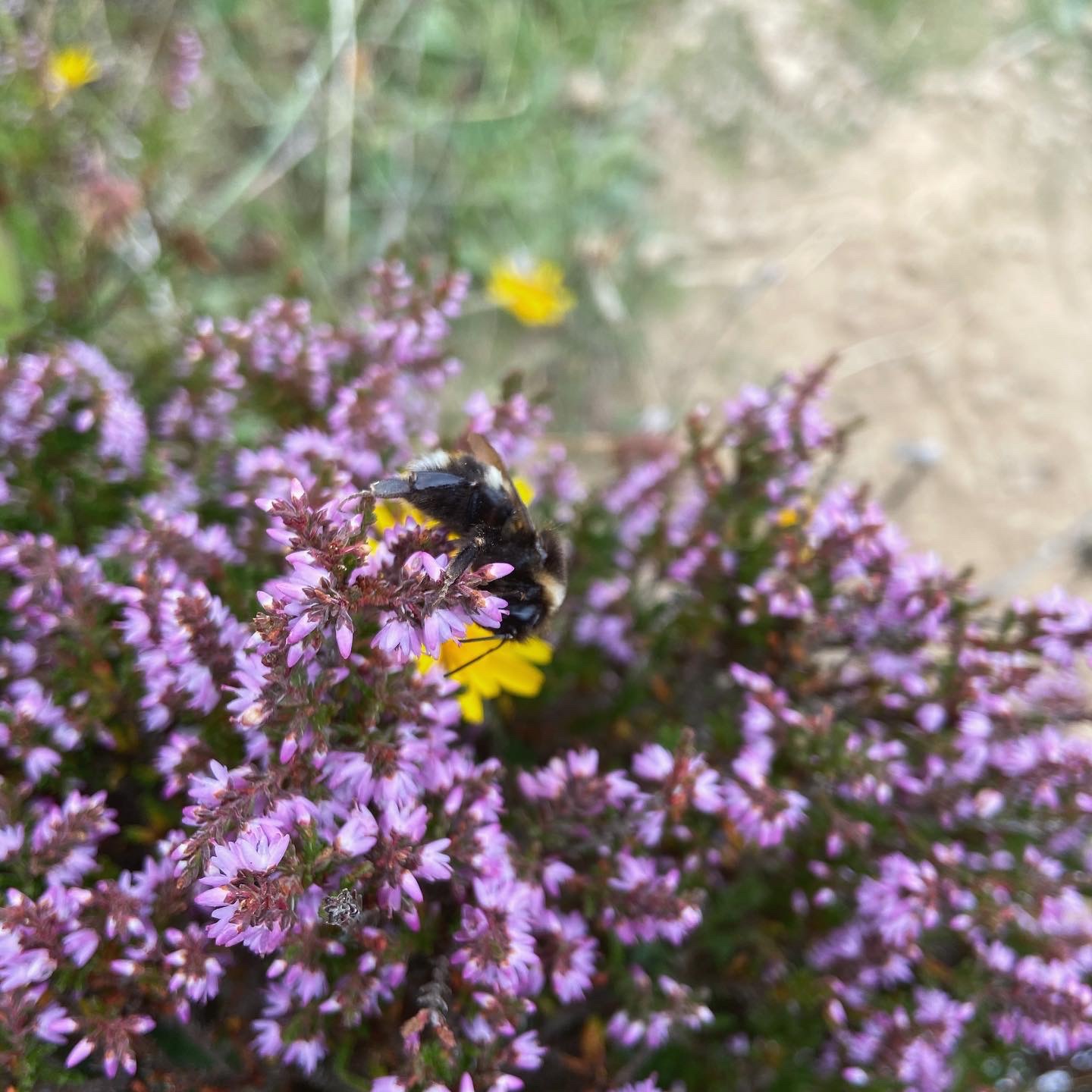
I don’t know about anyone else, but I remember learning about bees and pollen when I was in primary school. It wasn’t that in depth, but I have always had a fondness for bees. We often hear about there not being as many bees on the planet, but why are bees important and what can we do to help? In today’s post, I’ll be talking about what bees do for our planet, what we can learn from them and how we can help to take care of them.
There are over 270 species of bee in the UK, many of which are solitary. One of the most important things to understand about bees in relation to us is that we rely on their pollination to grow food. 90% of wild plants and 75% of global crops need pollination, and 1 in every 3 mouthfuls of food that we consume depends on pollinators. Bees produce honey, they travel along insect pathways between wildlife areas and they can dance! Their communication and cognitive skills are of great interest to scientists, particularly as their brains are the size of a poppy seed, yet they can accomplish complex tasks. So, bees are incredibly important – and I repeat, they dance!
So, bees are amazing and crucial for the planet, but why do we need to protect them? Many species of bee are in decline due to increasing use of pesticides, habitat destruction and the big one – climate change. No bees are protected by law, and we have lost 13 species since 1900, with 35 under threat of extinction. If the demise of many tiny, buzzing lives isn’t enough for you, then there are the parallels with our own struggles against climate change. A lot of the issues that affect bees affect us too. Natural green spaces that provide pollen for bees are great for our mental health, and give us natural spaces to absorb water and heat. Shifts in weather patters, which include droughts and flooding, are bad for us, and bad for bees too, as they are struggling to adapt to intense weather patterns. Increasing use of pesticides which reduce bees’ breeding successes and their resistance to diseases have impacts on us too, as chemicals make their way through the food chain. As bees are so crucial to agriculture, we will see (and are already seeing) affects on global food security as there are fewer pollinators in certain areas. It’s a big risk for us to rely so heavily on a species that is riddled by disease and dwindling in numbers.
How do we look after bees? If you find a bee that looks like it’s struggling, the best thing to do is to put it on a bee-friendly flower such as lavender, thyme or ivy. If you can’t do this, then make a mixture of half water, half white sugar (not brown sugar or honey), and offer the bee some, allowing it to take it’s time recovering. To encourage more bees into your garden or outdoor space, planting a range of flowers, particularly wild flowers, is really important, as bees need access to pollen all year round. Bees also get pollen from trees, so those are great too. Not using pesticides is also helpful, as synthetic products are harmful to bees – natural products can work just as well. You can also create places for bees to drink from by adding stones to a container full of clean water so that the bees can land on the stones and drink the water at the surface. This is something we have at home, where we filled a small bowl with shells and small stones, and it’s really nice to see the little environment that we have created for them. You can buy or make little hotels for bees that have tubes inside, which are really important for species like mason bees. They may seem like a tiny part of our planet, but it’s crucial that we look after them.
That’s what we can do individually, but collectively we need to campaign for the safety of bees in relation to pesticides and farming and support local beekeepers as much as we can. Asking your local council to think about bees and about local people is super important, as is inspiring your local community to make their outdoor spaces bee friendly. Researching this post just reinforced for me what a big issue climate change is – it can be a little overwhelming to think about how many tiny aspects of life there are for us to fix. However, thinking of it differently – putting some wild flowers in my garden is an easy thing to do, that could be a tiny, microscopic step towards defeating climate change.
Sources:
- Friends Of The Earth, 20 facts you need to know about bees, https://friendsoftheearth.uk/bees/20-facts-you-need-know-about-bees
- WWF, Top 10 facts about bees, https://www.wwf.org.uk/learn/fascinating-facts/bees
- The Guardian, Loss of bees causes shortages of key food crops, study finds, https://www.theguardian.com/environment/2020/jul/29/bees-food-crops-shortage-study
- New Scientist, Bees, https://www.newscientist.com/term/bees/
- Gardeners’ World, Best Plants for Bees, https://www.gardenersworld.com/plants/plants-for-bees/
- The Honeybee Conservancy, 10 ways to save the bees, https://thehoneybeeconservancy.org/how-to-save-the-bees/
 Waste Makes Waste