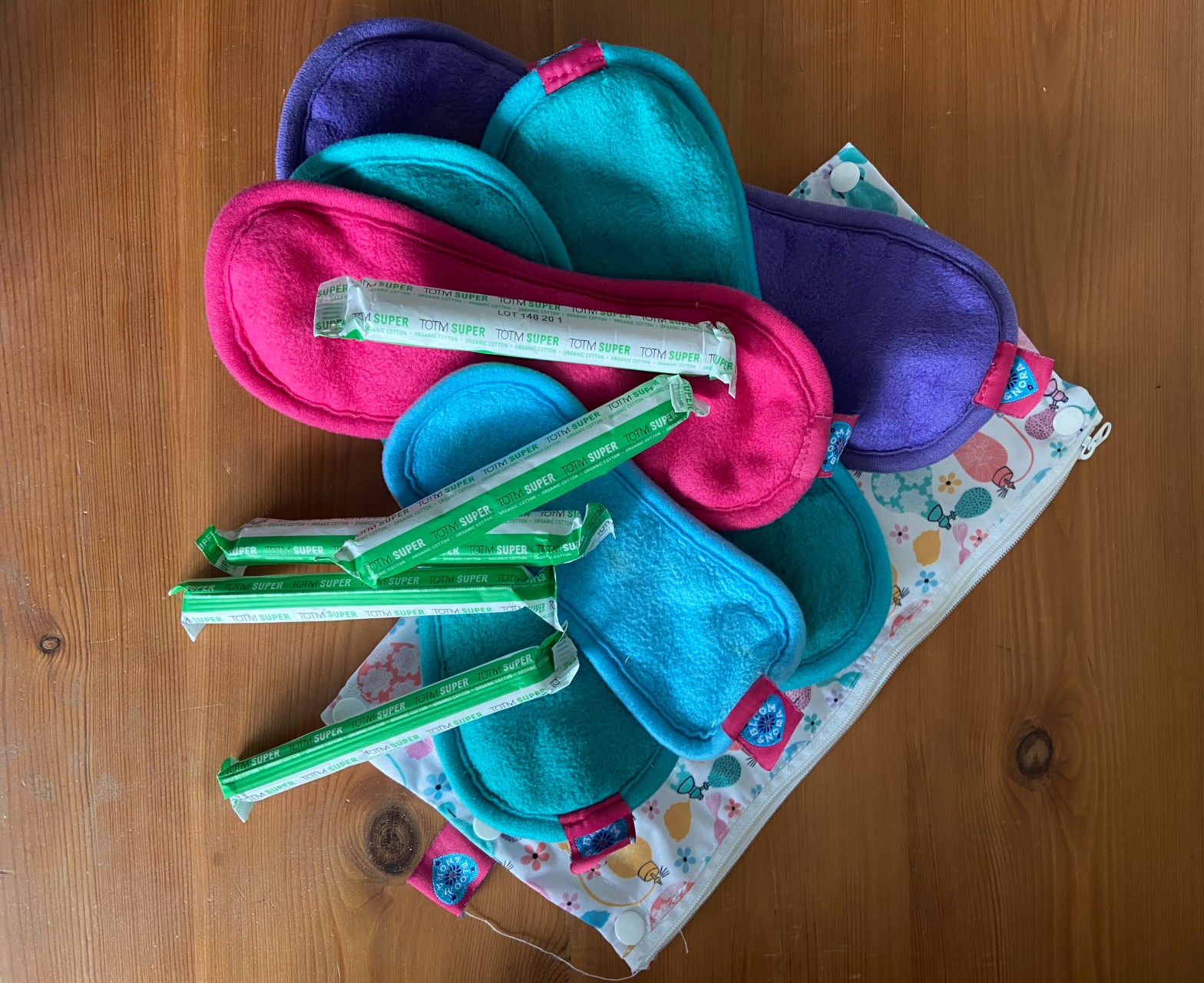
The 19th to the 25th of October is #environmenstrualweek – what does this mean? It is a week for everybody (whether they have periods or not) to talk about social justice and the environment in relation to periods. So with that in mind, this week I wanted to talk about the environmental and social impact of periods. I’ve done a post before about the reusable period products that I use, but today I want to talk about the others and go into some of the issues around periods. All products will be listed below!
There is still a huge taboo around periods, and they are made to feel like a shameful and uncomfortable thing. Because of this, there is often a lack of period education, for people who have them or don’t have them. Advertising and language around periods isn’t very inclusive, as it often excludes people of colour, or people across the gender spectrum. Companies do not have to list the ingredients in period products, and the cheapest products are often the least healthy and the most environmentally damaging. Up to 48% of girls in the UK are embarrassed about their period, and 3 in 10 people struggled to get access to period products during lockdown. Period poverty is real, and although there are lots of great initiatives and projects, there are still lots of people who struggle to access period products.
From an environmental point of view, period products tend to contain plastic, and end up in landfill or in our oceans. In a standard pack of pads, there are about 5 plastic bags worth of plastic, with 90% of the actual pads being made out of plastic. This not only impacts health, but also impacts the environment. Pads and tampons that are thrown away can take longer than the average woman’s lifespan to decompose! Disposable menstrual products are the 5th most common type of waste found on UK beaches, with up to 4.8 pieces being found per 100m of beach. This is partially because menstrual products are often flushed down the toilet – up to 4.6 million pads and tampons are flushed per day in the UK. Not only that, but pads and tampons are not sterile, because they are not classed as medical devices in the UK, and they are often fragranced which can lead to allergic reactions. So if all these things are true, why are they presented as the only option? Because in truth, they’re not.
Menstrual Cup
The most googled option, menstrual cups, are made out of medical grade silicone and are worn internally to collect blood. They can be worn for up to 12 hours, last 10 years and once the cup is full, you dump out the blood and rinse thoroughly. They are probably best as an alternative to tampons, as they are internal – the only difference is that tampons absorb blood, and the cup collects it. There are lots of brands to choose from, and you can normally find them in a zero-waste shop.
Re-usable Pads
My personal preference and one that you find commonly in zero-waste shops, are re-usable pads. Just like regular pads, you can get different styles and absorbencies, the only difference is that they are made from material, not plastic! They come in different colours, and they’re really soft and comfortable. One used, you rinse them with cold water, and then throw them in the wash as and when you can. Obviously, they don’t look pristine once you’ve used them, and they are bulkier than regular pads, but after a few uses, you get used to it. They’re surprisingly convenient, and adorable. These are probably best for pad users.
Re-usable Tampon Applicator
The only one that I have no knowledge of at all, is the re-usable tampon applicator. Plastic applicators are a single use plastic product, and often end up on our beaches – in one day, 27,938 used tampons and applicators were found across the world. Re-usable tampon applicators eradicate the need for single use ones, so you simply buy non-applicator, organic (if you can) tampons. They are medical grade and self-sanitising, so after use you simply rinse and dry. A good idea for tampon users, or for those who don’t want to move entirely to re-usables.
Period Underwear
Like the re-usable pads, these are probably best for pad wearers, as it should be a similar experience. Again, you can get different styles and absorbencies, but they can generally be worn for up to 8 hours and hold up to 4 tampons worth of blood. Check individual brand instructions, but similar to the pads, you just wash them and hang them out to dry. Like with the pads, it may take a little bit of time to get used to and to find the right style for you, but reviews state that they are super comfortable.
Biodegradable Tampons and Pads
If you’re not sure that you want to move to re-usable products just yet, then these might be for you. Pads and tampons made with GOTS certified organic cotton, and made without fragrances, synthetic absorbents and chlorine bleach, are much better for the body and the environment. They can usually be composted, including the applicators, and the packaging is recyclable. Obviously, there is still waste, but this is still so much better than plastic wrapped products!
So that’s it for this week in terms of blog posts, but make sure to follow me on Facebook and Instagram, because I’ll be posting more content there over #environmentstrualweek. If you’re interested in different brands and suppliers of all these products, go to http://www.wen.org.uk/wp-content/uploads/Suppliers-list-july.pdf. If you want to know more about #environmenstrualweek, then go to wen.org.uk or look for the hashtag #environmenstrualweek on Instagram, Facebook and Twitter.
 Waste Makes Waste