So, we’re approaching one of the busiest shopping weeks of the year, which is great because all the businesses affected by Covid-19 will be really grateful for our custom, right? Well yes, I’m sure they will be. But this isn’t necessarily good for the planet.
Black Friday originated in the United States of America, and the UK only started doing it a few years ago. Amazon was the first to do it in the UK, and now the vast majority of big shops do it, with a few exceptions. In the UK Black Friday is more of an online frenzy rather than one in person (rather appropriate this year), but there are still usually queues outside retailers. We spent £5.6 billion last year, and we are predicted to spend £6 billion this year. Unsurprisingly, younger generations spend the most, and older generations spend the least. Alarmingly, returns from Black Friday can be around 30%, compared to more like 10-15% the rest of the year, which can be a big threat to businesses as less than 10% of returns make it back out into shops. So, it’s a huge money maker and taker.
It’s a great idea, who doesn’t love a good deal? And, if you’ve been waiting to buy something, it’s a good idea to wait until it’s going to be cheaper right? Yes, that’s very hard to argue with. But, the biggest problem with Black Friday is that it heavily promotes consumerism. Got a phone that works and you like but isn’t the newest? Buy a new one for half the price and throw that one away! The concept is built around making as much money and selling as much stuff as possible, which isn’t good for our planet.
How bad is it for our planet? Well, it has been found that 80% of what we buy on Black Friday ends up in landfill – this can be practically anything, from clothes to electronics. A lot of these items are also made of single use materials, and even the ones that are recycled are likely to be recycled at very low quality. The other important thing here is the lifespan of each item – it’s incredibly short when it is bought on Black Friday, shipped soon after, and returned or thrown away not long before Christmas. Although the carbon footprint of delivery is slightly better in the USA than physical shopping, the shipping from Black Friday still represents a huge spike in CO2. Air pollution is expected to skyrocket, especially this year as everything moves online, with an expected 82,000 diesel delivery trucks and vans to hit our roads.
In 2018, 21% of people admitted to buying something they regretted on Black Friday. So, the suggestion is that this year, we all think about our decisions before we buy anything. I won’t blame you for buying stuff as part of Black Friday – I might, who knows – but I would encourage you to do a few things:
- Buy from small businesses, a lot of them take part in Black Friday and they need the support more than big companies!
- If you’re buying online from one company, request that everything gets shipped together, rather than a few days apart to reduce packaging and shipping trips.
- If there is an option to, ask for there to be no plastic packaging or even minimal packaging on your order.
- Find out more about the companies you’re buying from! If they have a sustainability section, look at it, if you aren’t happy with something that they do or do not disclose, then maybe reconsider your purchase.
- Finally, think about your purchase – do you really want/need it? Is it an impulse buy? Is it something you’ve wanted for a long time? Is there a better place to buy it that supports smaller businesses?
As I’ve often said, it’s not all about the consumer. Black Friday is another example of consumerism being rammed down our throats, so don’t feel bad if you get wrapped up in it. But, just know that it isn’t as harmless as they would have us think.
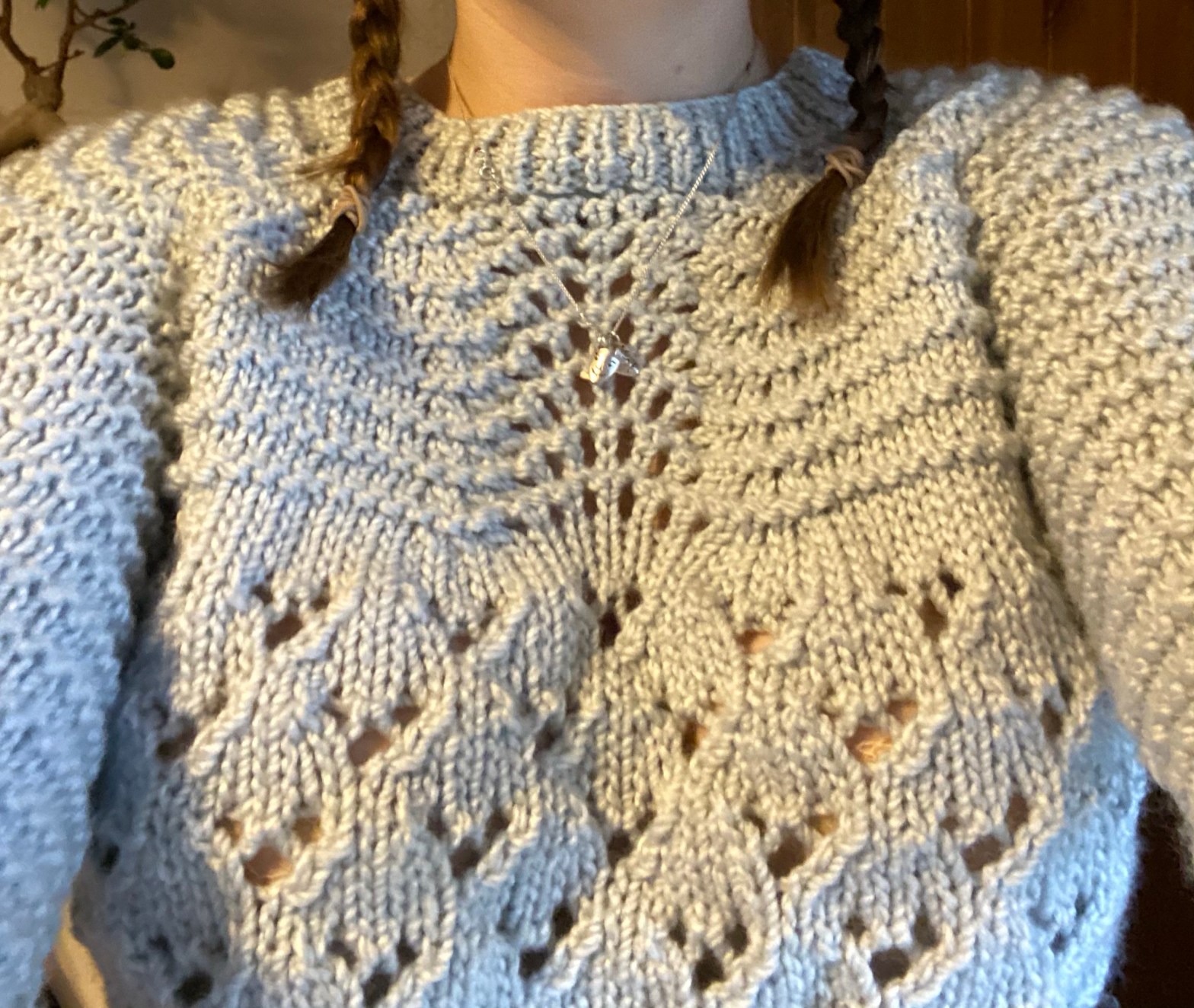
(Pictured is a jumper that my mum made me – that’s how I’ve celebrated Black Friday)
 Waste Makes Waste
Don’t really do black Friday myself. I like to compare items before I buy anyway (look how long it took me to buy the tumble dryer!!). Not good at impulse buys which it turns out is in fact good!
LikeLiked by 1 person