All About Health Anxiety

So, last week was Mental Health Awareness Week. In light of this, I thought I’d talk about something that I knew very little about until I started suffering with it a couple of years ago – Health Anxiety. Health Anxiety is often called hypochondria and can be misunderstood as someone being dramatic. So, hopefully this post helps to create some awareness of Health Anxiety.

Health Anxiety is an anxiety condition which causes the affected person to constantly think that they are ill or getting ill. It can manifest itself in a few ways:

  • Checking your body for symptoms like lumps, pains or tingling
  • Seeking reassurance from friends, family and doctors
  • Not believing doctors when they tell you that you’re fine, or worrying that they have missed something
  • Googling symptoms or reading articles about illness
  • Avoiding media about health, like TV shows, films and books
  • Avoiding activities because you think that they may make your ‘illness’ worse

So why does this happen? It’s basically a misinterpretation. What someone without Health Anxiety may not even notice, someone with Health Anxiety identifies as dangerous. Bodies make lots of weird noises and have little aches and pains that aren’t dangerous. For example, heavy breathing, muscle aches and heart rate changes are very common and not often dangerous. Once panic sets in, these symptoms can feel worse. For example, if someone with Health Anxiety gets stressed about a symptom, they may feel their chest get tighter, leading them to think that they are having a heart attack. Basically the symptoms are real, but the thoughts are incorrect. Fixating on a symptom can also amplify it. Fixation on one illness can be because it is common, they know someone who is affected by it or it is something that spreads easily.

This is how Health Anxiety affects me:

I am mainly preoccupied about having breast cancer or broadly any type of cancer. I also worry often about blood clots. None of these things are common in my family and I have no logical reason to think that they affect me, and yet, my brain tells me to worry about them. For me, this means that I check my body for lumps daily and I worry about whether the food I eat or the exercise I do can make these things worse. I also avoid TV and films about illness. I google my symptoms quite consistently, and I have been to the doctors more times than I care to admit thinking that I have something wrong with me. When they tell me everything is fine, I feel reassured for a little while, but then the same cycle begins again – checking for symptoms, worrying about symptoms, going to the doctors.

So yes, this does affect my daily life. I cancel seeing people because I’m too preoccupied with potentially having a serious disease. When I’m stressed about other things like exams, my silly, anxious brain tells me to instead worry about dying. I’ll have a normal day and feel fine, but when I lie down to go to sleep, my brain finds a reason to keep me awake, like a slight headache or a pain in my leg.

All this to say, I am getting better. I don’t check my body for lumps as much as I used to, and I write down any time I feel any symptoms to keep a record of how I’m feeling. But, it still affects me every single day, and I have to actively push myself past the doubt that my Health Anxiety causes. For me, that is the hardest thing – not being able to trust my gut. So, my advice if you’re suffering with this is to get help as soon as you can. It can be really hard not to feel dismissed with Health Anxiety, because although the symptoms are real, they are displaced. I’ve linked some helpful websites down below. The key thing for me was to learn that I’m not mad – the symptoms are real, they just aren’t dangerous in the way that I thought.

I really hope that this was informative and that you know more about Health Anxiety now than you did before. Regular sustainable programming will resume next week. All my love ❤

Links:
Rhubarb Crumble

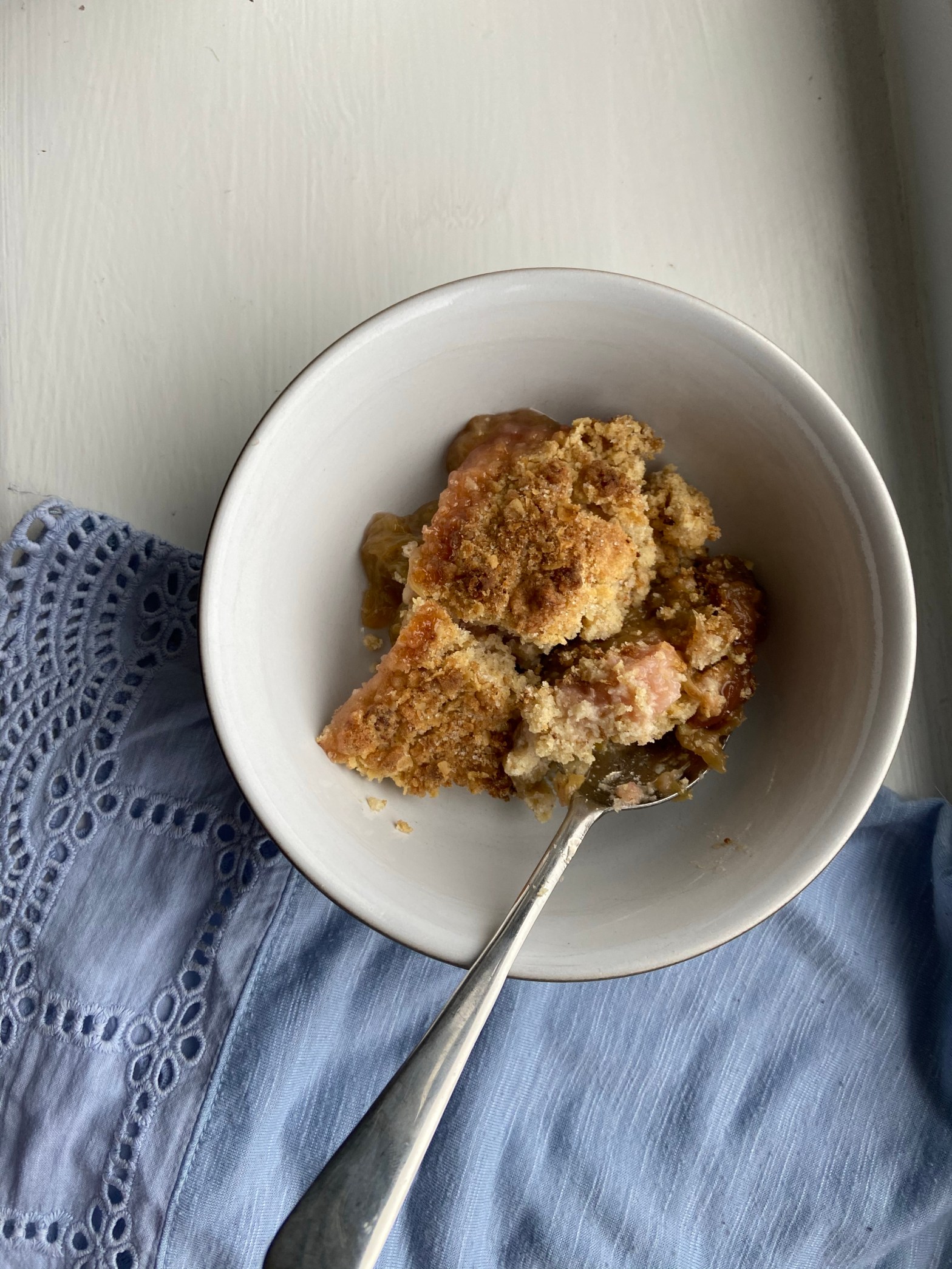
The first seasonal recipe for spring is a rhubarb crumble! I love rhubarb, and it’s one of the only fruits that grows in the UK at this time of year that is relatively easy to get. It’s great for jams, chutneys and pies, but I chose a crumble because crumbles are super easy to make yourself. You can buy a crumble mix from a supermarket, but it’s simple to make yourself, and I promise, it tastes better.

Ingredients:

  • 500g Rhubarb cut into small chunks (it’s ok to use it if it’s still green)
  • 150g sugar (if you’re making this as a vegan recipe, double check whether the sugar is vegan)
  • 3 tbs alcohol (optional) – port, madeira wine and rum all work well, adjust the amount to taste
  • 50g oats
  • 90g self raising flour
  • 85g cold vegan butter

Method:

  1. Preheat your oven to 200C.
  2. Chop up your rhubarb and add it to a saucepan with 100g of the sugar and your alcohol if you’re using it.
  3. Cover your pot and simmer the rhubarb mixture for about 10-15 minutes until it is soft, but not mushy.
  4. Transfer the rhubarb to a large baking dish.
  5. For the topping, rub together your vegan butter and self-raising flour until it resembles breadcrumbs.
  6. Add your oats and sugar and mix until combined.
  7. Scatter the crumble mix over the rhubarb and then bake for about 15 minutes or until golden brown – this time fluctuates a lot depending on how much liquid is in your rhubarb and what alcohol you use, so just keep an eye on it!
  8. All done! Serve alone, or with ice cream or custard. Enjoy!

So there’s the first seasonal recipe for spring! I hope that you have fun making this recipe.

Eating Seasonally in Spring

It’s the start of the seasonal series! I wish I’d thought of this at the start of the year, but here we go. At the beginning of each season, I will release a guide to eating in that season. Throughout that season, I’ll release seasonal recipes, usually a savoury, a sweet and some sort of beverage or snack. I will be sticking to fruits and vegetables, but I’ll link a few websites that I’m grabbing this information from which also detail meat and fish if that’s something you’d like to know. Eating seasonally is another approach to eating that lowers your carbon footprint because you are reducing air miles and chemicals. When something is out of season, it means that it has either travelled from abroad or it is being grown here under manufactured conditions. Obviously, it’s pretty difficult to eat seasonally all the time, but hopefully these recipes will give you an idea as to how to incorporate more seasonal food into your diets!

This week, I’m going over what food is most available in the UK in Spring. Spring in the UK is from March to May, which of course we are coming to the end of, but there’s still time to make a few treats!

Vegetables

There are a lot of vegetables available in the UK in Spring. Asparagus, beetroot, spring onions, kale, carrots, broccoli, peas, spinach and so many others are all in season. Towards the end of spring, more salad greens like lettuce and rocket start appearing, which are great for salads. Potatoes are also widely available in May, as well as chillies and peppers. For the full lists, have a look at the websites below.

Fruit

There isn’t as much fruit in Spring as there is in other seasons, like the summer. The big one is rhubarb, which you’ve probably seen at local markets or in allotments. Rhubarb is very easy to cook with, and you can use it in more savoury foods like chutneys as well as sweet recipes like jams, cakes and crumbles. Elderflower is also around this time of year, particularly in late May. You can eat the flowers and berries, but only after cooking them, otherwise they’re a bit toxic. Other parts of the plant are poisonous, so don’t eat them!

Herbs

Did you know that herbs are seasonal? Of course they’re grown, but I hadn’t put two and two together. Rosemary can be harvested all year round and is great to use in cooking. Sorrel, which is a tangy herb often used in Vietnamese food, is also available around this time of year. Basil, chives, dill and tarragon can also be grown around this time.

Hopefully this was helpful! Keep a look out for a couple of seasonal recipes this month before we move into the next season – summer.

Seasonal Eating Sources:

Eat the Seasons

Love British Food

Vegetarian Society

Do Individual Actions Make a Difference to Climate Change?

One of the questions I get asked the most is whether small things like eating less meat, using a bamboo toothbrush or composting your veg scraps make any real difference in the grand scheme of things. This is a really difficult question to answer, so I thought I’d talk about both sides of the argument. On one hand, small actions cannot make huge differences because big companies and governments are the ones who have to change. But, small actions can help to drive big changes, and there will need to be a societal shift driven by influence if we are going to avoid the worst of climate change. So, do small actions make a difference?

The biggest argument for individual actions not making a difference is that climate change is a huge problem, which requires huge solutions. For example, we know that if we want to stop global warming, we have to keep fossil fuels in the ground. This will only happen if there is a global change in fuel consumption and there are alternative methods found. My individual action of choosing to walk once instead of driving cannot singlehandedly solve this. We also know that solving climate change will cost a lot of money, which will also have to be handled by governments or companies. It will take an estimated $300 billion to halt emissions, which could be contributed by billionaires, governments and companies, but will almost certainly not come from the general public. So, why recycle all your veg peelings when a billionaire could halt climate change?

There is also the argument that the idea of making individual changes was created by large companies to divert attention from their actions and towards individuals. For example, the carbon footprint was pushed forward by companies like BP and Coca-Cola, creating the idea that the consumer is to blame for plastic pollution, greenhouse gases and all the other climate related problems. Therefore, emphasising individual actions encourages this false narrative, which may damage overall climate efforts. It can also be extremely frustrating to know that you are doing all you can, but governments and companies are telling you how much you need to change whilst doing either nothing or the bare minimum themselves.

However, there is a lot of evidence that making individual changes can influence others. Social influence is extremely powerful and has been since human society began. Think of fashion as an example. Skinny jeans were in when I was in school, but recently they’ve become unpopular and wider legged jeans have moved into fashion. This change means that more people wear wider legged jeans. Perhaps this is because they prefer them, or they are more available in shops. Or, it is because everyone else is doing it, and they want to fit in? This could have a similar impact in terms of being climate conscious. For example, trends may drive demand which drive supply. Just look at how the market for vegan food has expanded in the past couple of years. 10 years ago, meatless options were nowhere near as good, and there weren’t as many. Because there is more demand, supply has to follow. Logically, this could be applied to other things. Influence may also depend on who the influencer is. For example, if a celebrity stops flying for environmental reasons and publicises this, it is likely to have a larger impact that someone with less of a following.

Overall, I like to think that really we need both. It’s important to push for the bigger changes by voting and lobbying governments and companies to make changes, because ultimately these are the decisions that have the biggest influences. However, that doesn’t mean that making conscious decisions to be sustainable in smaller ways isn’t worth it. Choosing not to fly, eating less meat and consuming more consciously are all really good things to do, particularly if they influence others around you to do the same. But, don’t beat yourself up if you can’t do all those things, or you’re not perfect at it. So, small actions do make a difference, but big actions make a big difference. Therefore, we need to do both.

Thanks for reading! If you have any suggestions for future posts, or want to start a conversation about this one, be sure to leave a comment!

Are the Super-wealthy Climate Superheroes or Climate Supervillains?

Wild Magazine's avatarWILD Magazine

Performativity, or the potential to create lasting change? Lucy Allis examines the role of the super-wealthy in combatting climate change.

Recently there have been lots of news stories about billionaires pumping money into climate change, particularly carbon capture. This seems entirely positive on the surface, particularly because we’re always hearing about how expensive climate change is, and it gets people talking about it. But, some of these pledges and prizes have been described as ‘hollow and egotistical’ and only a small dent in the money needed to halt climate change. There’s also an argument that the super-wealthy use more resources and cause more emissions than anyone else. So, what is the role of the super rich in the fight against climate change?

When I say super-rich, I am referring to the richest people in the world, like Elon Musk, Jeff Bezos and Bill Gates. These people can…

View original post 843 more words

Earth Day

Thursday the 22nd of April is Earth Day each year, but what is it? What does it mean? And where has it come from? If you’re from the UK, you may not have heard of Earth Day in the same way, because it started in America. It is now a global event which includes over 1 billion people around the world. So, to mark this day this year, I thought I’d explain some of the history of Earth Day and why it’s important. I’m also going to touch on how brands will be using Earth Day to greenwash, and what things to look out for!

History

The first Earth Day was in 1970, and it marks the start of what we now know as the environmental movement. There has been some understanding of climate change since the 19th century, but it was only in the mid 20th century that people actually started talking about it. A book called the Silent Spring was published in 1962 which started to raise concern about climate change. In 1969 there was a huge oil spill in Santa Barbara, after which there was outrage about pollution. Senator Nelson was inspired by the anti-war movement to start a teach-in at colleges, alongside Denis Hayes. This became Earth Day and gained lots of media attention, with 10% of Americans joining in. This produced the momentum needed for the Clean Air Act, the National Environmental Education Act, the Occupational Safety and Health Act and the creation of the United States Environmental Protection Agency (just to name a few). Earth Day continued to 1990, where it became global with 141 countries taking part. Earth Day 2000 focused on clean energy and global warming, and Earth Day 2010 combatted climate denial after the Climategate incident of 2009. So, although this started as an American event, it is now global and has contributed to great change.

Importance

So we’ve seen that Earth Day can prompt big changes, which is one of the main reasons that it is important. It’s another opportunity to use our voices, particularly as we run more and more out of time. It’s also a great opportunity to learn about and appreciate our planet and how much it is capable of. It can help people connect to others who are concerned about the environment, particularly through litter picking and other similar activities.

Greenwashing

However, Earth Day is also a great marketing ploy. Be prepared in the run up to Earth Day, and especially on the day itself, to see brands publicising ‘sustainable’ clothing collections and products, how they offset products or services, and how they’re doing their bit. Of course, some of this is good, and is actually a great example of brands taking some accountability, but most of it is greenwashing. So, don’t take these adverts at face value, ask yourself a few things:

  • Has this brand done anything other than this that is sustainable?
  • Have they got a section on sustainability on their website?
  • Do they pay their workers properly?
  • Do they participate in consumption trends like fast fashion?
  • Is there any proof?
  • Are they trying to trick you with images of ‘green’ things, like trees or recycling?
  • Are they using vague terms like eco-friendly or green?

If they’re doing these things, it’s likely that it’s greenwashing. This is really important to look out for so that we contribute to the right companies who are doing the right things, consistently. So, a few takeaways for this week:

  • Earth Day is a great opportunity to protest, educate and appreciate.
  • Earth Day has played a part in climate history.
  • Earth Day can be stolen by brands and used to greenwash.

I hope that this was helpful! Thank you so much for taking the time to read this, and happy Earth Day!

Hummus Recipe

Hummus (or houmous, if you spell it like that) is one of my favourite foods. When I first went vegetarian, hummus was one of my go-to foods, especially for sandwiches. But, since looking at my dairy consumption, I discovered that some hummus has cream in it?! I also realised that each pot, which I would get through pretty quickly, has a plastic pot and lid, a plastic seal and a cardboard sleeve. All of this made me think, can I make this myself? The answer is yes – it’s easy and it’s better than any other hummus I’ve had. So, here’s the recipe! It’s a combination of a few, which I’ll link below.

Ingredients:

  • 1 tin of chickpeas
  • Garlic (to taste – I use one large clove)
  • 1 tbsp Tahini
  • Juice of 1 Lemon
  • Salt (to taste)
  • Olive Oil

Method:

  1. Drain your chickpeas – be sure to reserve the liquid (aquafaba) for another recipe.
  2. Either in a food processor or blender, blend your chickpeas with your garlic, tahini, lemon juice and olive oil until relatively smooth.
  3. Taste, and add your desired amount of salt.
  4. Taste again, and check the consistency. If it is too solid, add some more lemon juice and blend again.

This hummus will keep for about 5 days in an airtight container in the fridge, but it’s so delicious it doesn’t last that long for me! You can also add more flavours to your hummus if you want to spice it up. You can add pesto, red peppers, avocado and beetroot (just to name a few).

I hope you love this recipe. As always, if you give it a try, let me know – enjoy!

Recipe Inspiration:

My Haircare Routine

I’ve talked a bit about zero waste and low waste skin care before, but I’ve never really talked about haircare. This is mostly because I’ve been through a bit of trial and error, particularly over lockdown. So, this week I thought I’d breakdown what products I use on my hair and how I look after it!

Haircare can have a huge impact on the environment. For example, a haircare routine where you shampoo your hair twice and use a wash out conditioner can use 14,222 litres of water and 1252kWh of energy, and has a carbon footprint of 500kg of carbon dioxide equivalents. Alternatively, washing your hair twice a week and using a leave in conditioner uses 613 litres of water and 55 kWh of energy, and produces a carbon footprint of 25kg of carbon dioxide equivalents. There is also the plastic aspect to consider, with the UK throwing away 520 million shampoo bottles every year, which is obviously terrible for the environment. Bathroom products are also less likely to be recycled, possibly because they tend to be further away from our recycling points (which are often in kitchens). So, if haircare can have a big impact, how can we minimise this on a personal level?

So to start off, what is my hair type? My hair is naturally straight and smooth and isn’t very thick. It’s on the oilier side, and I have a very dry scalp. This means that it can look dirty quite quickly, and that I sometimes get dandruff.

How often do I wash my hair? I wash it twice a week. I used to wash it a lot more than this when I was younger because it looked oily, but actually I’ve found that the less I wash it, the longer it stays looking clean! Overwashing hair can irritate your scalp and encourage dandruff, so that’s another reason I don’t wash it too much. I also wanted to limit my water use when I’m in the shower, so by washing my hair less it means that my other showers are significantly shorter.

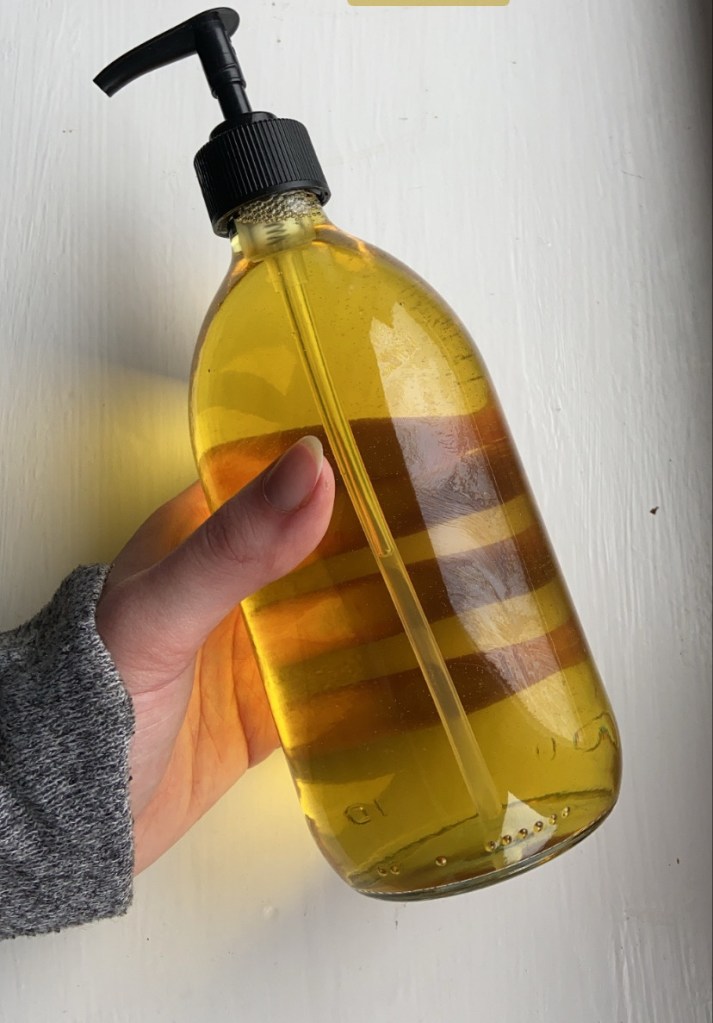
What products do I use? I used to use dandruff shampoo, which was really expensive and pretty full of chemicals. Then I tried using a shampoo bar. Now, I’d thoroughly recommend trying shampoo bars, because I know plenty of people that love them, but they didn’t work for me. It’s important to know your hair type before picking the type of shampoo bar, so make sure you do a bit of research before hand. So, when I realised that the shampoo bar wasn’t working, I tried refilling my shampoo in glass bottles at a local shop. I’m currently using Faith in Nature shampoo and conditioner, and I love them. I have the grapefruit and orange shampoo (but I’ll probably move to a tea tree shampoo when I next fill up) and the coconut conditioner, both of which I love.

How do I look after my hair? I think like most people, I’ve taken my hair for granted a lot, it’s always just flowed out of my head without me really thinking about it. Now, I try to be kinder to it. For example, I wear it down more often so that I’m not pulling it back all the time and damaging it. I also don’t brush my hair when it’s wet, because this can encourage dandruff and can damage your hair, and I don’t use heat on my hair very often.

That’s all this week! How do you look after your hair? Is your routine low waste? Do you have any tips for haircare or reducing bathroom waste? Let me know!

Tomato Soup Recipe

In the UK, spring isn’t generally that warm. I know I’m still wrapped up in jumpers, and so I love a comforting but fresh soup to have for lunches. My favourite soup is a classic Heinz tomato, but this isn’t vegan and can feel a little artificial. So, I decided to make my own. It’s really easy, and you can add additional flavours if you’d like to be a bit more adventurous. So, here’s the recipe!

Ingredients:

  • 1 red onion (chopped)
  • 1 tin of whole tomatoes
  • 4-6 beefsteak tomatoes, with the stalks removed
  • Garlic, peeled (to taste – I use 2 cloves)
  • 1 tbsp tomato puree
  • 2 tbsp olive oil
  • 1 cup Vegetable Stock
  • Basil, mixed herbs and paprika (to taste)
  • *A dairy replacement, if using (coconut milk/cream, dairy-free yoghurt/cream or potato)

Method:

  1. Preheat the oven to 180°C. Add the onion, garlic, tinned tomatoes and whole tomatoes to a baking dish and drizzle with the olive oil. Season with salt and pepper, and bake for about 30 minutes. When done, set aside to cool.
  2. Once cooled, add the baked tomato mixture to a blender, or use a hand blender, and blend until smooth. If you want really smooth soup, you can remove the tomato skins before blending, or pass the mixture through a strainer.
  3. Add your blended mixture to a large pot, and then add the stock and your herbs (and your dairy replacement, if using). Simmer for about 20 minutes, then serve.

*Dairy replacements – I like this soup as it is, but if you want a really creamy soup then you may need to add something. If you’re using a dairy free cream, yogurt or milk, then add this to the mixture with the stock. If you’re using potato, peel and chop your potatoes and boil them while the tomato mixture is in the oven. Once they’re soft, add them to the blender and blend with the tomato mixture.

This is an easy recipe, and so it’s easy to add extra flavours to. I ended up adding spinach to this batch because it was lingering in the fridge. If you want a smokier flavour, try adding chilli and more paprika to the roasted tomatoes. You can also add pesto, other vegetables like pumpkin, red pepper or spinach, and even gnocchi or orzo.

That’s it! As always, if you try this recipe then let me know – enjoy!

The Pill and the Environment

Recently, we’ve heard a lot about the Covid vaccine and potential risks of blood clots. In response, people have been talking about the blood clot risk related to the contraceptive pill and how this isn’t talked about very much. Something that is talked about even less than this is the environmental impact of the pill, so that’s what I’m going to be looking at today!

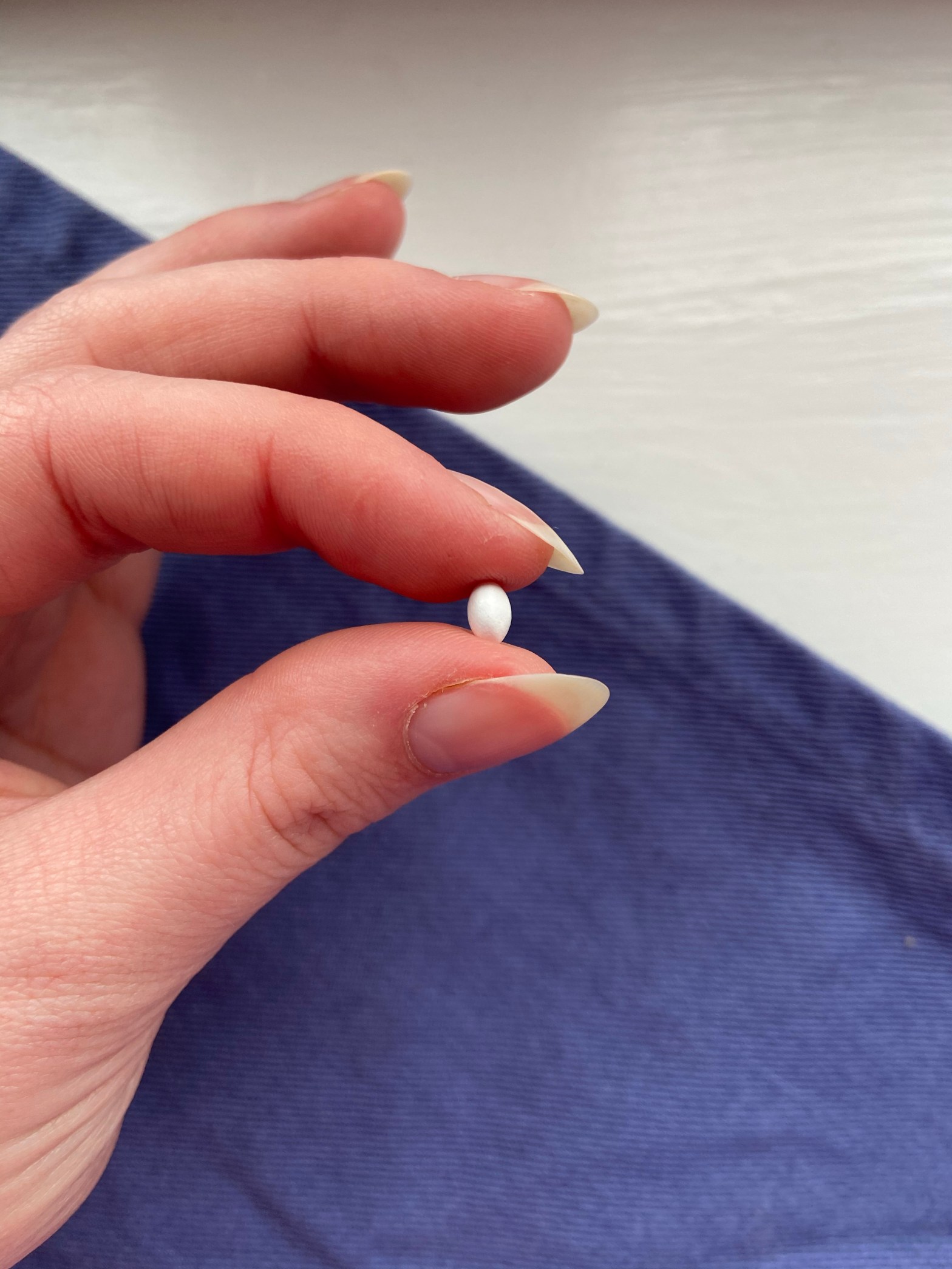
First of all, what do I mean by the pill? There are two types of contraceptive pill – the combined pill and the progestogen-only pill. In this post, I’m talking about the combined pill, which is a very popular form of birth control which contains a synthetic hormone called EE2 (ethinyl estradiol). When used correctly, the pill is 99% effective at preventing pregnancy. This is done by stopping the ovaries from releasing an egg every month, thickening the mucus in the womb and thinning the lining of the womb. This makes it more difficult for sperm to reach the womb and more difficult for eggs to implant into the womb lining. For more information about the pill, have a look at the NHS site.

So, when people take the pill, they absorb some of the hormones, and the rest leave the body when they go to the toilet, eventually ending up in our water. EE2 is one hormone that ends up going into the water, which can affect fish by making it more difficult for them to reproduce. How? Well, fish (and humans) have something called an endocrine system which releases hormones that regulates the body. EE2 disrupts this system, which can lead to fish developing a condition known as intersex. Intersex means ‘the irreversible development of eggs in the testes of male fish’, which can mean that fish can’t reproduce, which damages species numbers. In fact, some species have already collapsed, even where levels of EE2 are not that high.

What can we do about this?

We could regulate the pill before it is used so that fewer hormones end up in the water. This would be done under the umbrella of developing ‘green drugs’ which are less harmful to the environment. For the pill, this might mean using a different hormone to EE2 which is less damaging, or reducing the amount of EE2 in the pill. But, this is a long-term solution, because it takes a lot of research and safety inspections.

We could also create returns programmes for expired and unused pills – this is something that already exists in several countries and for many types of medication. This could bring down the number of unwanted chemicals in our water. I don’t know who needs to hear this, but do not put medication down the toilet – it’s terrible for the environment, the water system and means that they have been wasted.

We can also treat water to remove chemicals like EE2. I won’t go into detail about exactly what these processes are, but basically they include filtering water through things so that the EE2 gets caught, and the water is cleaned. However, these methods are very expensive, because infrastructure has to be upgraded – in England and Wales, this would cost about €30 billion. These costs would probably be covered by rising water bills. Unfair, right?

Why has nothing happened if this is an issue? Well, research is still ongoing, and although we have identified EE2 as a problem, it is unclear how much of a problem it is – in other words, governments are only going to pay out for it if it is enough of an issue. The pill is also a widely used contraceptive, with 2.5 women taking it just in the UK. The pill gives people freedom and flexibility, and although there are some negative side effects, a lot of people feel that the benefits outweigh the risk.

Going forward, we need to do more research into the damage that EE2 does and how efficient removal methods will be. We also need to look at the pill, how it is used, how it is disposed of and whether there any alternatives. As with most environmental issues, we need to decide whether we want to pay up or whether we would rather settle for environmental damage.

I really hope that this was interesting and not too sciency. As always, be sure to follow me on social media (@waste_makes_waste) for extra things like reels and more insight into what I get up to!

Design a site like this with WordPress.com
Get started