The Label Series: Clothing Labels

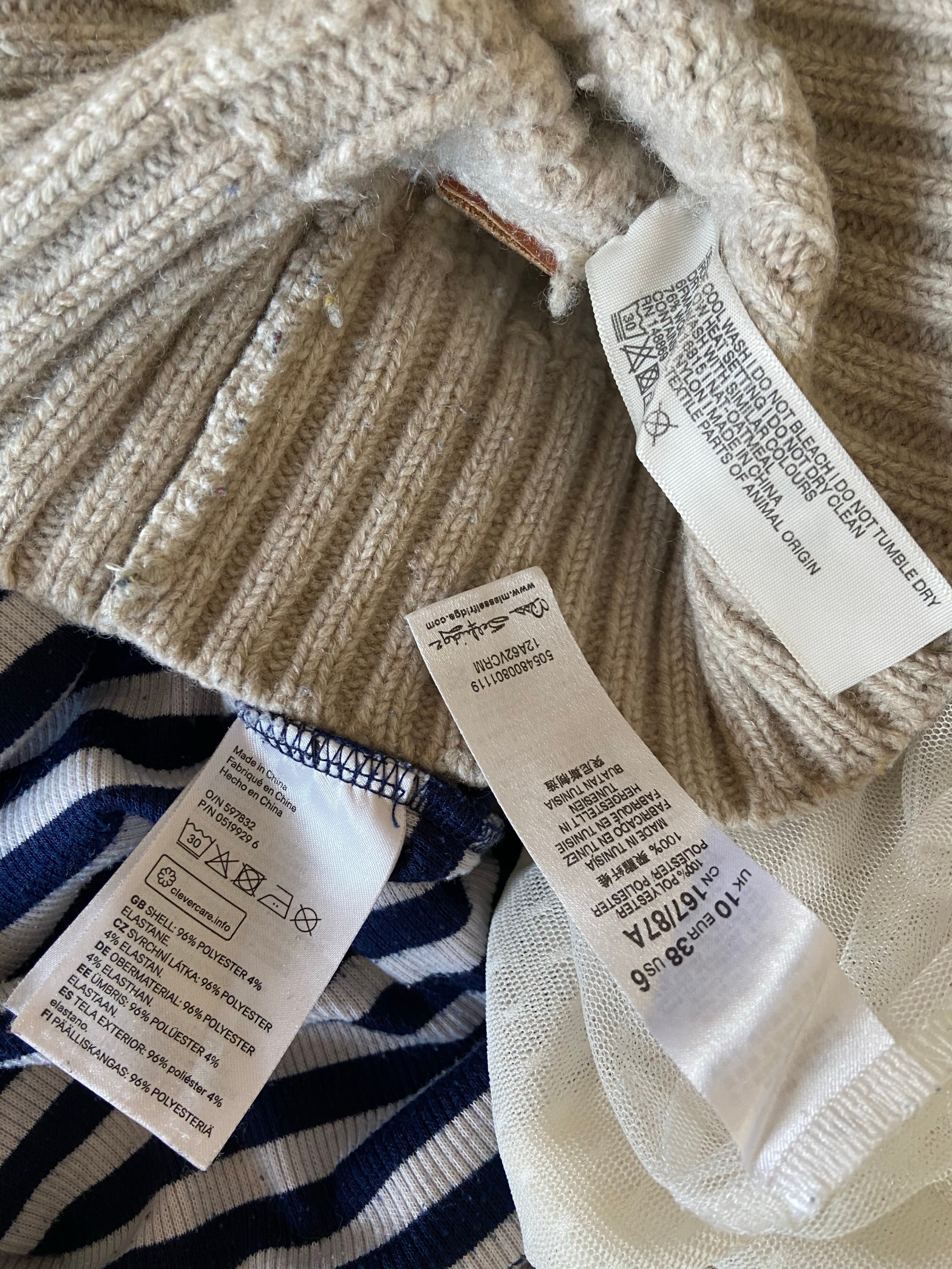
When I was younger and I’d go clothes shopping with my mum, we would always steer clear of items that say ‘hand wash only’, and try not to buy clothes made from synthetic materials. But are either of these things good? In this weeks label series post, I’ll be talking about the labels we see on clothes, which are mostly material and care labels. This will be slightly different to the food labels and packaging labels, as some of these are a guide to making your clothes last as long as possible, which is great for the environment.

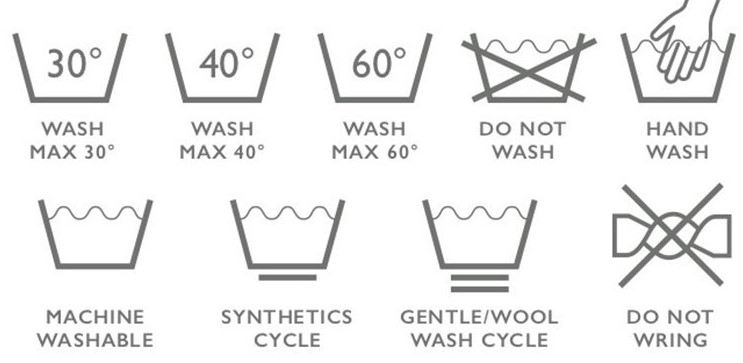
Washing Symbols

PETA cruelty free logo

These symbols mostly all involve a bucket and instruct you as to how to wash your clothing item. In terms of sustainability, I tend to wash everything at 30 unless the item calls for a cooler temperature. I also wash delicate items (like tops with loose stitching or embellishments) inside string bags, so that they are protected from other clothing items. It’s also best to use natural ingredients in your washing powder, as this will be kinder to the oceans. Go for plant-based, organic and vegan (not tested on animals) where possible.

Portughes Laundry and Dry Cleaning | How to Decipher Clothing Care Symbols

Drying Symbols

These symbols let you know whether or not something can go in the tumble dryer, what heat to put it on, and whether to use a delicate cycle. Obviously, using a tumble dryer is not great for the environment, as the average cycle uses 4kWh of energy and produces about 1.8kg of CO2. So, always try to dry your clothes outside if you can, or on an airer near good ventilation (to prevent condensation). Both of these methods are actually better for your clothes and help them to last longer. If you do need to use a tumble dryer, then the following things can help keep the energy usage lower:

  • Put your washing on another spin cycle so that the clothes are not as wet, and therefore do not need as much time in the dryer.
  • Fill up your dryer instead of doing lots of little loads.
  • Separate your clothes out so that the air has lots of room to circulate, so the clothes dry quicker.
  • Put similar materials together so that everything dries evenly – for example, if you put a towel in with t-shirts, the towel will dry much slower than the t-shirts, so put it in with other towels.
  • Clean your filter regularly and keep the vents clear.

Ironing Symbols

Washing Symbols Explained - Which?

Each person emits about 190 kilograms of CO2 per year from using electric irons. So avoiding it where possible is a good idea. A pro tip for those of you who either don’t want to iron, or do not have an iron – hang up your item in your bathroom when you have a shower, and leave to hang – it’s not perfect, but it does remove some wrinkles, particularly if the garment is heavy. You can also avoid ironing by being careful with how you place items out to dry – if you dry them flat, there shouldn’t be too many creases. These labels tell you whether you can or cannot iron, and at what temperature. Some materials such as silk need to be ironed at a low temperature, and others cannot be steamed such as suede. If you are ironing, try not to turn your iron on and off all the time, as the heating up of the water and restarting the iron uses the most energy.

Bleaching Symbols

use non chlorine bleach
bleaching allowed
do not bleach

Bleach is sometimes used on whites to make them brighter, but not all fabrics can be cleaned with bleach. The following symbols tell you whether an item can be cleaned using bleach. Bleach is not great for the environment, but if you want your whites to be white, then there are some alternatives. Baking soda, white vinegar and lemons are all great natural whiteners, as is the sun! You can also use oxygen-based bleach and hydrogen peroxide. All the measurements for these ingredients can be found on The Spruce in the sources section.

Dry Cleaning

do not dry clean
petroleum solvent only
any solvent except trichloroethylene
any solvent
dry clean only

There are some items which should be left to professionals, like coats and jackets or highly embroidered items like dresses. Dry cleaning can help an item to last longer, as the process is more delicate than with an everyday machine. However, the process of dry cleaning often uses harsh chemicals and produces hazardous waste, such as ‘solvent, soils, carbon, dyes, grease, and powdered filter material’ (Eco Street). A chemical called perchloroethylene is often used, which can cause fertility issues, contaminate water and create dangerous smogs. Some dry cleaners have changed chemicals since this was discovered, but it is still better to wash your own clothes where you can. These symbols tell you whether an item can be dry cleaned, and what solvent should be used.

Overall, these labels just give you the correct instructions for the item you have purchased. In order for these labels to help you to be more sustainable, we need to know what the processes include and what they do for the planet. So, always read the labels, and be considerate when you’re doing your washing and drying!

Sources:

The Label Series: Food Packaging

Packaging labels are very confusing – what can be recycled and what can’t? We know that only 7% of the plastic is recycled, yet so much of it is labelled as recyclable, so what do the labels actually mean? This weeks guide should explain what these labels mean, what they are used to communicate and which ones are good to look for when you’re shopping! Some of these labels apply to packaging outside of food, but are commonly found on food packaging, so you can look out for these on other products too!

Recycling Labels

It’s good to remember with all recycling labels to check your local recycling rules – for example, my grandparents postcode does not require glass to be separated from plastic, but one of my friends who lives just over the boarder in the next country is required to. You can also find more recycling opportunities at supermarkets, tips and recycling banks. For example, most supermarkets allow you to take back plastic bags, and my local zero waste shop allows me to recycle crisp packets, so it’s always worth having a look! Below are what some of the labels mean.

Recycle
Remove Film
Lid On
Rinse
  1. Recycle – this indicates that this is recycled by 75% or more of councils across the UK, however you do have to check that your council is part of this percentage. Plastic bottles are an example of this.
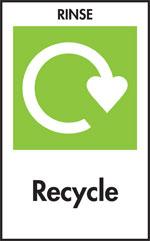
  2. Recycle, Rinse – This label indicates that the material must be rinsed to avoid contamination, otherwise it may not be collected. As a general rule, all packaging must be clean in order to be recycled, so always clean your recycling before you put it out.
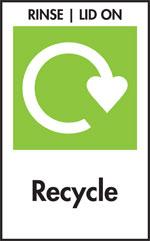
  3. Lid On – Plastic lids under 40mm in diameter are often too small for recycling, so it may be better to place the lid back on the bottle or container so that it can be detected. This label encourages you to do so.
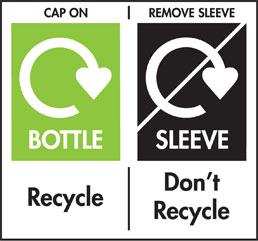
  4. Remove sleeve or film/ do not recycle – This label tells you that although part of the packaging may be recyclable, another part may not be, so they must be separated. The films that cover trays of foods like meat or vegetables are often made from LDPE, which you can read more about below. If these are not removed, the other item (often a plastic tray), cannot be recycled.

Green Dot

Green Dot

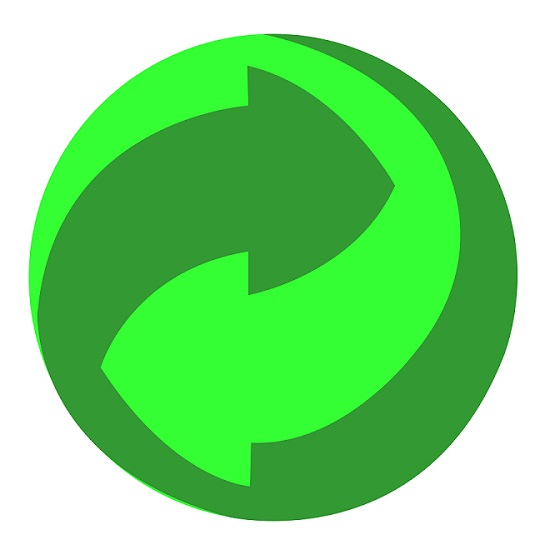
This is one that makes my blood boil. This symbol, despite looking like the above recycling labels and the mobius loop below, does not mean that the packaging can be recycled. In fact, any company can use this label, even if the packaging is not recyclable or made from recycled materials! This label is actually an indicator that the company has donated towards packaging recycling somewhere in the world, and is a financial symbol. So, be wary of this one.

Mobius Loop

Mobius Loop

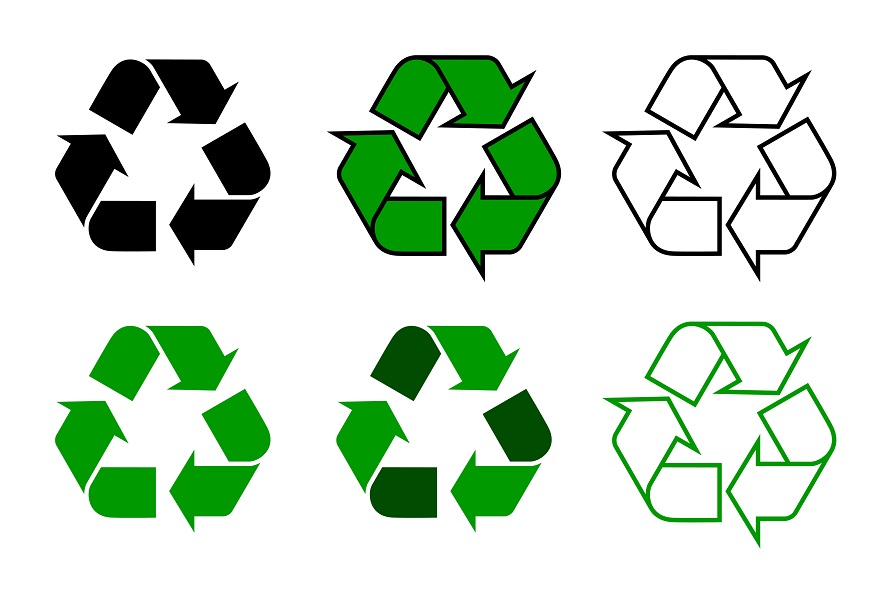
You’ll have seen this one before, but you might not know that this is what it’s called. It is ‘a triangle composed of three arrows looping back on themselves in clockwise direction’, and sometimes has a percentage inside it. This symbol means that the packaging can be recycled, and the percentage can refer to the amount of recycled materials that the packaging is made of. The presence of this symbol does not always mean that there is any recycled material in the packaging, so be wary.

Plastic Resin Codes

Plastic Resin Codes

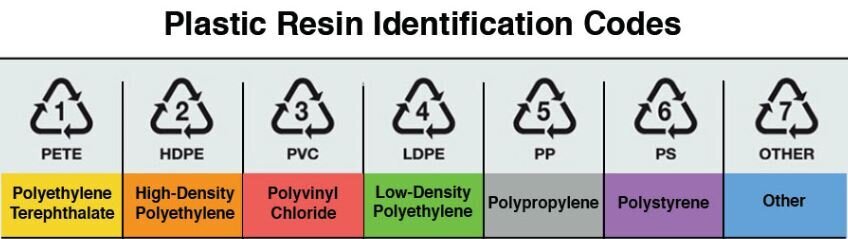
Plastic resin codes show what type of plastic a product is made of. Different products are made of different plastics, and each is different in terms of whether it can be recycled or reused. The symbol is always the same, but with the corresponding number shown below.

  1. Polyethylene Terephthalate (PET) – this is the most used plastic in the world. Commonly used for plastic bottles and food containers, this is the same polymer that is used for polyester, which is used to make clothes. PET is very durable, yet lightweight and hygienic, and is easily recycled. It is also easy to make PET from recycled materials.
  2. High Density Polyethylene (HDPE) – this plastic is very strong, which is why you will see it often on packaging for cleaning products, as it is strong enough to resist bleach. It is also used for shampoo bottles and bottle caps, because it is stronger than plastics of the same weight. It is easily recyclable and can be made from recycled content.
  3. Polyvinyl Chloride (PVC) – although PVC is most commonly used for construction (like windows and pipes), it is also used in products like bottles, clothing and inflatables. PVC can be used in two forms – rigid and flexible – and in both is strong, durable and long lasting. It can be recycled to make new PVC products, such as flooring, but is almost never recycled.
  4. Low Density Polyethylene (LDPE) – LDPE can be used to make carrier bags, bin liners, films that cover foods, foams, squeezy bottles and toys. It is also used to make the rings that connect cans, which infamously end up in the ocean and choke birds. It is strong, flexible and not susceptible to corrosion, and although rigid LDPE can be recycled, flexible products are difficult to recycle and can contaminate other plastics, so it is only recycled sometimes.
  5. Polypropylene (PP) – this is the second most produced plastic. It is resistant to chemicals, colourfast and heat and fatigue resistant. Because of this, it is commonly used for packaging, including reusable containers and flip top caps. It is easy to recycle, but can only be recycled 4 times in a closed loop.
  6. Polystyrene (PS) – now we’ve all heard of this one. Often used in its expanded form for take-away boxes and protective packaging, it is also used in a rigid form for yogurt pots, crockery and disposable razors. It is not recycled in the UK, but some councils recycle it at recycling centres.
  7. Other – this is the group of all the other plastics, including acrylic, nylon, polycarbonate, bioplastics and plastic combinations. These are all almost never recycled.
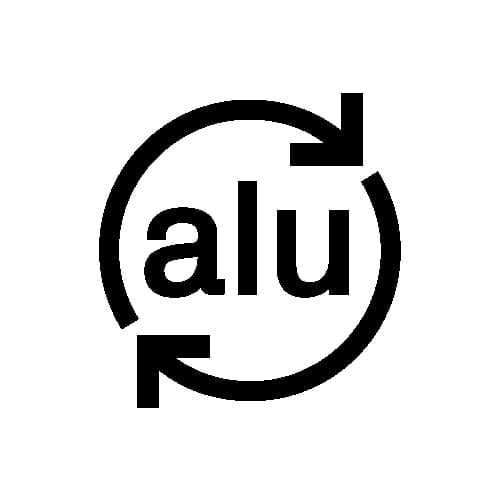
Item is made from Recycled and Recyclable Aluminium.
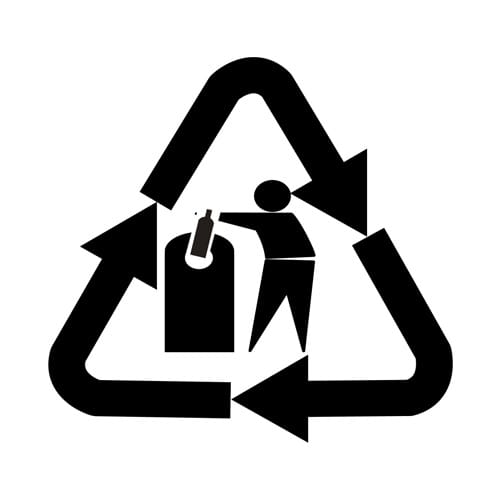
Item is made of glass which can be recycled, either at home or at a bottle bank.
Item is made of recyclable steel.

Materials

Other materials that packaging can be made from include glass, aluminium and steel. All of these are self explanatory, but here are the explanations of these particular labels.

Compostable, Home Compostable and Biodegradable

This is another weird one. These three labels seem almost interchangeable, but in reality they are very different. Products labelled as home compostable can be thrown into your compost bin at home, and will decompose naturally. Every component should biodegrade into good soil for your garden. Products labelled as compostable can only biodegrade in a commercial composting facility where heat treatment is used to accelerate the composting process, so do not try and put these materials in your compost! Products labelled as biodegradable contain materials that will break down within a short time – mostly between 6 and 9 months. So, do not mistake one of these for another!

FSC Logo

FSC

The FSC logo is an assurance that the trees used for the product or packaging were replaced or allowed to grow naturally, and is mostly found on timber products, paper and kitchen utensils. It is also an indicator that the welfare of people and animals has been though of and protected, so an excellent label to look for.

Eco Label

Eco Label

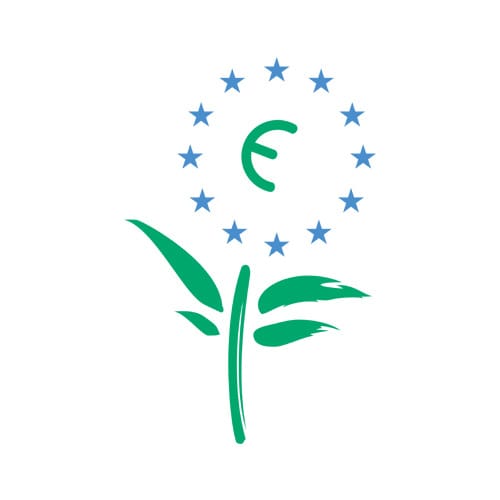
This is one that I haven’t seen that much, and would like to see more of. This label is part of an EU scheme for products that are eco-friendly, which rewards companies with accreditation for products that use low emissions and recyclable materials. A famous user of this is Ecover.

So that’s it for now! If I’ve missed any labels, then let me know, and keep a look out for the ones I’ve mentioned.

Sources:

The Label Series: Food Ingredients

If you’re concerned about the environment, what are the most important things to look for when you’re shopping for food? Well, today, I should be able to answer that. The following are all labels that you could see on products, what they mean and why we should try to buy products that use them. Remember, if a company is sustainable, they will always advertise it because it is likely to make them more money, so if a product does not list any of these things, it’s probably because they are not sustainable! Also keep in mind that we can only do our best, so just try and look out for these things, and don’t get disheartened if all your favourite foods are terrible – simply lobby the company to do better.

Suitable for Vegans/ Vegetarian

Certified Vegan Label

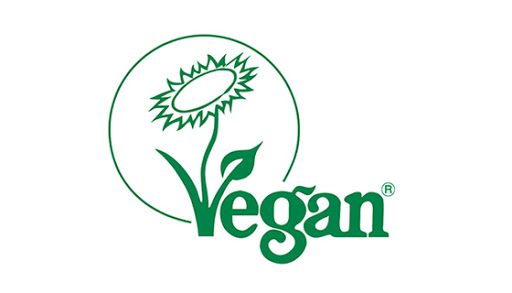
It’s a well known fact that eating less meat and dairy is better for the environment, so why not have a look for more vegan or vegetarian food? Even if you do eat meat and dairy, finding an alternative that you like is a great start to moving towards being vegetarian or vegan. For example, why not try and dairy free butter, or meat free sausages? If you do want to find these foods, then just look for a ‘suitable for vegans’ or suitable for vegetarians’ label. Several products also have a certified vegan logo, which you can see here. Lots of foods that you might think are vegan or vegetarian, aren’t, so always check, because even if they don’t have meat or dairy in the ingredients list, there may be some in the process. For example, Parmesan is traditionally made using rennet, which comes from cows. So, have a go at finding something that is animal product free.

Palm Oil

RSPO Certified Label

I did a whole post about Palm Oil which I will link below, but the short answer is that if you are buying foods with Palm Oil in, then you need to look for the RSPO label. Some products may just put ‘sustainably sourced Palm Oil’ in the ingredients list, which is worth checking out. If you can, have a look at the sustainability section of the website of whatever company you are buying from, and you should be able to find out whether it is sustainable or not! Not all products will list Palm Oil as Palm Oil – it has many different names, a list of which you can find on the blog post linked below.

Organic

Organic Label
Organic Label

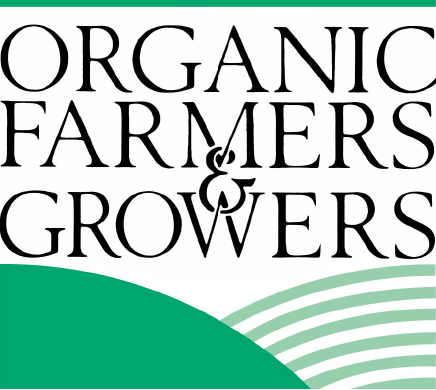
So this is one that most people have seen before. Products with these labels are often a lot more expensive than the non-organic version. Foods labelled as organic have to fulfil certain requirements by law. Legally, they have to be free from pesticides and chemical fertilisers and have good animal welfare standards. They also have to be free from genetic modification (listed as GMO or GM), routine antibiotics, and colours and preservatives. As all of these requirements are checked every year for certified products, this is a good symbol to look for. No label is required, but sometimes the ones above are used.

Free Range

This one is a little confusing. Again, in order to label something as free range, there are certain requirements. For eggs, the chickens cannot have been inside for more than 12 weeks and there can be no more than 9 hens per square metre, with 10cm of feeder per bird and one water source per 10 birds. There is a helpful guide by the CIWF (Compassion in World Farming), that grades different schemes. Generally organic, free range eggs are slightly better than just free range eggs. In terms of meat, organic poultry is also regulated. Chickens must have access to open air for half of their lifespan, with fresh vegetation. They also cannot be kept in enclosures of more than 13 chickens per square metre, and must be 56 days old before they are slaughtered. Pork isn’t regulated in the same way, but it is suggested to farmers using the organic label that pigs are kept outdoors for their entire lives, preferably with open pasture. Cows and sheep are mostly reared outside for some of the year anyway, so there are not really any regulations for them. So, if you do eat meat and eggs, try and look for ‘free range’ and ‘organic’.

Country of Origin

Most prepackaged products have to list a country of origin, which is where ‘the product was wholly obtained or, if production involved more than one country, the country where the product last underwent substantial, economically justified processing’. There is also the ‘place of provenance’, which is ‘any place where a food is indicated to come from that is not the same as the country of origin. These are good things to look at if you are concerned about air miles, or want to buy British products.

Fairtrade and Rainforest Alliance

Fairtrade Label
Rainforest Alliance Label

Fairtrade and Rainforest Alliance labels look at livelihoods as well as the sustainability of ecosystems and biodiversity. The fairtrade label is awarded to products that meet certain requirements, such as long-term contracts, a price that can accommodate living and sustainable production and investing in social work. Remember, sustainability is about people too. Fairtrade marked products have to have a minimum percentage of fairtrade ingredients. The Rainforest Alliance label indicates that products are ‘environmentally and socially responsible’, and works with farmers, foresters and tour operators. This appears more on timber and paper products, but does appear on bananas and coffee too. Both of these labels are excellent to look for if you are concerned about the social impact of products (which you should be).

LEAF Marque and the Marine Stewardship Council

LEAF Label
MSC Label

These labels are marks of being environmentally friendly. The LEAF Marque links environment and farming, and is basically an indicator that this product has been created with the environment in mind. The MSC (Marine Stewardship Council) is internationally recognised as an indicator of sustainable and well-managed fishing. It requires healthy fish stocks, thriving oceans and good management. So, both of these labels are designed to tell us how sustainable a product is.

So that’s it for food! Let me know if I’ve missed any labels, or if you want to know more about one of these. Have fun paying attention to your labels!

Sources:

The Label Series: An Introduction

Hello, and welcome to the Label Series. This series of blogs will look at what labels actually mean, what labels to look for if you’re trying to be sustainable, and which ones to avoid. This will include both ingredients and packaging of products, and will be focused on UK labels. So today, I will be going through what labels are supposed to do, how they work and what we can expect in the future.

In a nutshell, labels are designed to inform. If it’s a food label, it’s to tell us what is in the food we’re consuming. If it’s packaging, it’s to tell us what it is made of and how to dispose of it. So, do companies have a duty to inform us of how sustainable a product is? I’d argue that they do. If consumers are aware of what each product costs the planet, they may think twice about purchasing it, or choose something that is more sustainable. The labels that we see on products can generally only be used if they meet certain demands, which I will go through in detail for each label, however there are some that are less specific. The one that springs to mind as an example of this is the ‘widely recyclable’ label, which is often on packaging. Whether things can be recycled often depends on where you live. So, labels can be confusing, and this series aims to make things clearer.

What will labels look like in the future? Well, there was a push in 2007 to include a carbon footprint label on products, with retailers like Tesco at the forefront. There was a government backed scheme to include carbon emissions on products from food to cosmetics, with some companies joining in. However, companies found that the scheme was too time-consuming and expensive, so it was ended. But hopefully, this kind of informative packaging will increase in the future. The traffic light system that we have now that shows the calories, saturates, fat, salt and sugar in food, was widely opposed by businesses because they thought that it would decrease sales, and yet now, that label is widely used. So, change can happen.

So that’s the introduction to the Label Series! Each week I will discuss a category of labels, including food ingredient labels, clothing material labels and packaging labels. They will all be aded to the folder ‘The Label Series’ on this blog.

Sources:

The Grocer: https://www.thegrocer.co.uk/environment/can-carbon-labelling-for-food-and-drink-products-finally-find-its-feet/602771.article

A Chat with Where Romy Roams Jewellery

Hello! Today I’m doing something a little different. I interviewed Romy, who makes jewellery out of beach materials and we chatted a little about cleaning up our beaches and oceans. Below is a transcript of what was said, and if you want to see the video then head over to my Instagram to see the IGTV, at waste_makes_waste.

Lucy: Hello Romy!

Romy: Hello Lucy!

Lucy: Hello. So, we’re gonna talk about beaches and cleaning up beaches, so I want to start by asking – just tell me about yourself, what do you do?

Romy: So, I have a handmade jewellery company, which, I go to beaches all around the UK and I collect sea glass, and shells, and stones and sometimes plastic, and I wire wrap them and I make them into cute, little necklaces and earrings and sell them on Etsy. And, it started because I spent a lot of time in Cornwall, sort of around the coast a couple of years ago, and Cornwall – stunning! Like, the beaches, amazing. Erm, and I started collecting little bits of sea glass because they’re super like, pretty and colourful, and I got the idea to make jewellery as well. So yeah, that’s sort of what I do.

Lucy: Ok. So, you said that you sort of started making it because you liked the materials, so what is your favourite material to use?

Romy: Probably sea glass. I have some sea glass earrings on, just to model! So sea glass is from like, anything glass (obviously) that ends up in the ocean, so it could be from shipwrecks, which I think is really cool because I always think of shipwrecks being really old and pirates and mermaids, and like, those bottles and like, little potion bottles have been crushed up in the sea and then tumbled until they’re smooth, and they get a sort of frosty kind of look. They could also just be from litter, from like wine bottles and stuff, like, that’s gone into the ocean. But they look really pretty, and also by making them into jewellery, I am taking the litter out of the ocean and wearing it – and it looks nice.

Lucy: Haha, yeah I see that! So, you’re taking rubbish out of the ocean and often beaches, so is there a lot of litter on the beaches you go on, or are they getting more and more clean as you’ve started doing this?

Romy: It varies. Some beaches, because of the way the tide works, which I don’t totally understand, but some beaches will collect loads of litter. So, you see pictures and stuff of some beaches that are just filled with litter in some countries, and some beaches don’t really have that much. And, that can be a combination of the way the tide goes just doesn’t pick up the litter to that beach, also some beaches are cleaned more than others, because there are loads of charities that do beach cleans quite regularly, so they hit some beaches but they don’t hit all of them. So, some beaches, because I always try to pick up at least 5 bits of plastic or litter on a beach I go to, and sometimes I actually struggle to do that, which is great. And sometimes, there’s more than I can pick up, and it’s sad.

Lucy: Yeah, it’s definitely… I know what you mean, it does depend which beach you go to, some seem to have more and some seem to have less, but I assumed that was down to the people that go on the beaches, I didn’t realise it might be to do with the tide so that’s very interesting. So, if people are going to the beach, what is your advice to them to be mindful of the beach that they’re on?

Romy: Obviously, take all your litter home with you, if you’re having like a barbecue or a picnic or having your lunch or whatever that’s fine – don’t assume there’s going to be bins there, because I think some people think ‘oh well there’s not a bin provided so it’s not my problem, so I can leave litter’. But, the environment is all of our problem, we’ve all got to take responsibility for what we do here, the impact that we’re having. So, take your litter home with you. It’s also really good, if you can, to pick up litter that you see, because some stuff, you know some people do litter, or it can come out of the ocean or stuff that gets caught in the wind – just pick up a couple of bits. If everyone picked up a couple of bits every time they went to a beach, then we’d probably start to see a bigger change, so I think that’s a really important thing to do. There’s a really good charity and instagram page called the 5 minute beach clean – I think that’s what it’s called – and they promote, you just do 5 minutes on the beach, whatever beach you’re at, just pick up as much stuff as you can. They’ve got cute little tote bags you can buy and litter picking sticks so you don’t have to touch – you know, don’t want to get the corona.

Lucy: Yeah, particularly at the moment, very, very relevant.

Romy: So yeah, so that I think is what I would suggest.

Lucy: So, which beach cleans would you recommend, are there any in particular?

Romy: So, there are loads all over the country and loads of charities that you can go on their website and they’ve got really good, clear information about how to do a beach clean, how to stay safe, because often you can find like hypodermic needles and stuff and obviously you need to dispose of those safely or anything sharp like glass. So, there’s the Surfers Against Sewage website (very good), the 2 Minute Beach Clean, the Two Hands Project is another good one, and then the Marine Conservation Society have an event coming up really soon which they do either every year or twice a year called the Great British Beach Clean. So, they get lots of people involved and it’s happening from the 18th-25th of September. So if you go on their website, they’ve got all this information, and they’ll also tell you which beaches are already being cleaned by other people, so that everyone doesn’t do one beach – especially at the moment with corona, it’s good to be spaced out. So you sort of, almost, book into a beach and say ‘I’ll clean this bit, this metre of beach’ and someone else will do this yard or whatever. So I would suggest going on the website and having a little look.

Lucy: Yeah, that sounds great – I might do one of those myself being as I’m sort of close to the coast (not really, but a little bit).

Romy: I’m like, the furthest away from the coast that you can get where I live in the midlands, I’m in the middle of the land, so it’s really hard.

Lucy: Yeah. Where is your closest beach?

Romy: Maybe… Either Weston-super-mare or somewhere in Wales, the other way. I don’t know.

Lucy: Yeah, that’s tricky. So sort of a last question, why is it important to clean beaches, why should people be concerned about whether a beach is clean or not?

Romy: Well, I have done quite a lot of research on this recently and the figures and the statistics on plastic in the ocean are actually quite frightening. Up to 8 million tonnes of plastic gets like put into the ocean every day, which is like – I can’t even imagine how much plastic that is, I don’t know what that looks like. And it’s not just big bits of plastic, it’s the little microplastics, which are often in face washes and stuff, which they’ve stopped doing I think, but there are still a lot of facewashes that do have these microplastics in, or microbeads. And that, not only does it take up space in the ocean, you know you can literally see piles of plastic in the ocean, but also, this plastic draws in chemicals to these floating islands of plastic. That then pollutes water sources for towns and villages which has a really big health impact, you know, it’s been linked to cancer and birth defects and stuff like that. So it has that kind of impact and then also the animals in the ocean, the little turtles and the fishes and the dolphins, who are either eating it or getting suffocated by it. And, plastic bags in the ocean look just like jellyfish, and the little turtles eat the plastic bags and die. And then we eat the fish, that have plastic in, they like, absorb it into their flesh because of the little microplastics. We end up digesting that plastic that we’re putting in the ocean, and that’s really bad for us as well. So on all fronts, it’s not good to have plastic in the ocean. I think the general consensus is that it’s not a good thing to have happen and we should stop it.

Lucy: We should. Yeah, it’s really scary at the moment when they’re finding the disposable face masks in the ocean, and you may have seen the pictures of birds caught in the loops that go around your ears. If you use disposable face masks, which I really hope you don’t, but if you do, cut the ear loops before you throw them away. But I would really recommend the reusable ones, because they’re really good and you just throw them in the wash – but that’s a separate issue.

Romy: And you save money as well, it’s like £7 or £8 for a reusable one, but you’ll end up saving money in the long term.

Lucy: And you can coordinate them to your outfit which is really exciting.

Romy: I’ve got one right here just to show off, my reusable-

Lucy: Oh that is lovely, really lovely. And they’re really easy to make as well, I made one, two, the other day and they’re not difficult (if you’re not a sewer they might not be that easy), but they’re definitely an approachable task.

Romy: Yeah, I just bought them from other people who can, because I can’t.

Lucy: Yeah, generally with your plastic you should be recycling it if you are using it and you should be lessening the amount of plastic that you actually have. Because it’s something, there’s a really great TV show on the BBC that was on a couple of years ago called the War On Plastic, and it’s just done another episode, and in that they talk a lot about, funnily enough, plastic. And, I can’t remember exactly what the statistic is, but it’s something like every minute a truckload of plastic gets thrown into the ocean, so the fact that the amount we see on beaches is only a portion of it, we don’t really know exactly how much of it there is because we can’t look in every single corner of the ocean. And that’s really scary. So, any final message to people about beaches, about plastic, about anything really?

Romy: Don’t put plastic in the ocean. Just, you know, obviously we can only do a certain amount as individuals, we can only try our best, so even if you can’t be completely plastic free in your life, that’s ok, no one’s judging you for that, but if you’re reducing your plastic use then that’s good enough. Like using a reusable mask instead of disposable, or if you’re not able to do that, using a reusable water bottle or even if you don’t use that every time, if you’re using it half the time, you’ve reduced your plastic bottle intake by half. And that’s still like, a big amount. So, just keep trying your best, and every time you go to a beach, pick up a little bit of litter, and all the little bits, they do help.

Lucy: And where can people find you if they want to look for your jewellery and all that good stuff?

Romy: I am on Instagram and also Facebook as whereromyroams, and I’m on etsy which is where I sell all my jewellery bits, so that’s also whereromyroams on etsy. We’ll link it.

Lucy: Yeah, all of this will be linked. Well thank you very much for talking to me about the sea and the turtles and the jewellery making, it’s been very nice having a little conservation based chat.

Romy: Thank you for having me, it’s been lovely.

Lucy: Great, well thank you very much and goodbye.

I hope you enjoyed today’s post – if you’d like to see more content like this then please let me know! Everything mentioned above is linked below.

Romy:

Sources:
Mushroom Stir Fry

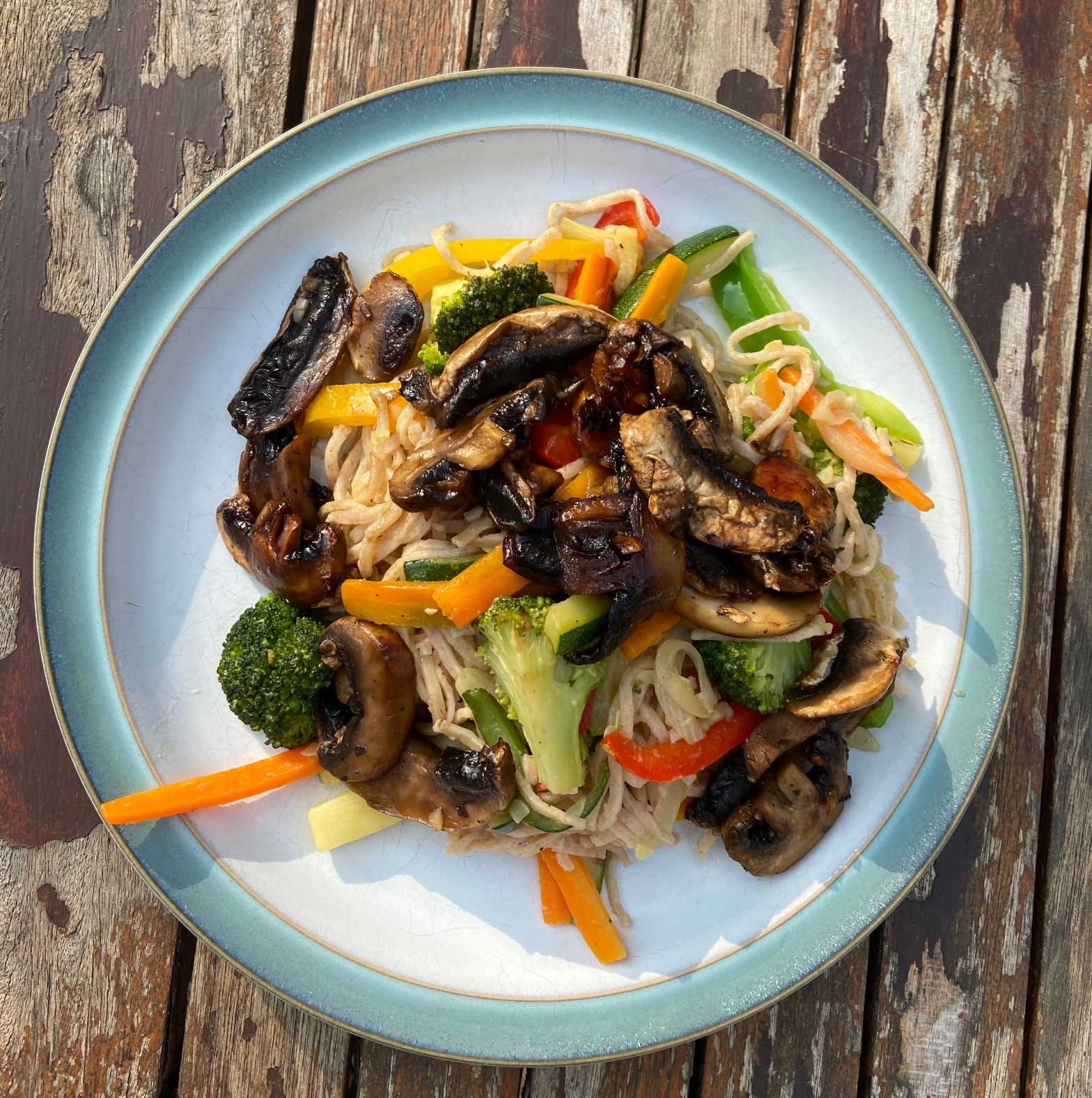
Stir fry is one of my favourite meals to make, especially when I’m cooking for other people who aren’t vegetarian or vegan. I can do the same base, then add mushrooms or tofu for me, and meat or fish for other people. I tend to do a very plain stir fry, then put the flavour in the toppings. This recipe was a popular request from instagram (@waste_makes_waste), so enjoy and as always if you have a go at this recipe, share it with me!

Ingredients:

  • Mushrooms
  • Noodles (I use wholewheat, dry noodles – if you want this dish to be vegan, make sure they are not egg noodles)
  • Mixed veg (I use onion, red and orange pepper, courgette, carrot and broccoli.
  • Cashews (or sesame seeds)
  • Sesame oil
  • Olive oil
  • Soy sauce
  • Garlic
  • Agave, brown sugar or honey*

Method:

  • I start by boiling the water for my noodles and setting them off while I chop the veggies. You want them all to be quite thin, so it can take time. Chop the mushrooms into chunks or thick slices.
  • Once everything is chopped, take your mushrooms and put them into a bowl. Add 1 clove of garlic, minced, 3 tablespoons of soy sauce, 2 tablespoons of agave and a sprinkle of either your cashews or your sesame seeds. mix it all together until the mushrooms are covered.
  • Heat up a tablespoon of olive oil and a tablespoon of sesame oil in a wok, and add your broccoli. Cook this for a few minutes so that it has time to soften, then add your carrot. Again, cook for a few minutes. Then add the rest of your veg and cook until you are satisfied with how soft it is.
  • I cook the mushrooms in a separate pan. Heat some oil in a small frying pan, and add the mushrooms. Cook until they deepen in colour and the nuts are soft.
  • Once your veg and mushrooms are cooked, add the noodles in with the veg and saute until they are slightly crispy. Plate up the noodles and veg, then put the mushrooms on top. Serve with extra soy sauce, if you like.

Enjoy! This is a quick and easy meal, and it also works for lunch if you have leftovers.

*If you use honey then this recipe will not technically be vegan, but you can use honey if you prefer it.

The Idea Of Trying

A bit of a reflective post today, not as many facts and a lot more feelings. I’m about a year into my journey of learning more about the environment and trying to do as much as I can to be sustainable in all aspects of my life, and yet I still sometimes feel helpless. So today, I wanted to talk about how important the word ‘try’ is in sustainability, both individually and as a whole. There are too sides to this – it’s important to accept that you can only do what you are capable of, and to not get bogged down in the feeling of not doing enough. However, it is also important to see that on a larger scale, ‘trying’ is not enough to solve the climate crisis.

Sometimes, I’m buying food and I realise that if I want to make the pasta bake that I have planned to make, then I will need some more pasta. This means that I will have to buy some in plastic packaging, because that is my only option other than not having that dinner at all. After this, I’d go home and beat myself up for running out of pasta from a zero waste shop, or not having the energy to think of a new recipe that uses things I already have. This leaves me feeling helpless, and that I can’t make a change. But recently I’ve tried to find a new mindset, where I appreciate my efforts and realise that I can’t be 100% sustainable 100% of the time. I am a human being, with very human flaws and feelings. This is really important, because the idea of failure can put people off reducing their waste if they have an all or nothing attitude, and we don’t need a small group of people doing zero waste perfectly, we need lots of people to do it imperfectly – just by trying. So, it’s important to encourage people to ‘try’, even a little bit.

But, if we want to get to net zero by 2050, ‘trying’ simply isn’t enough. If we somehow manage to achieve net zero, we will still only have a 50:50 chance of avoiding 1.5 degrees of warming. That is a hideous fact, that no one seems to be mentioning. This 50:50 scenario is the possible outcome when we do everything we can – we don’t ‘try’, we DO. So imagine what will happen if we continue to ‘try’ – by reducing instead of eradicating, by negotiating instead of demanding. Of course reducing is good, but there comes a point when this isn’t good enough. Individually, we can only do what is within our means, mentally, physically, financially etc. But as a whole planet, we have to do more than ‘try’, we must DO.

So you see, the word ‘try’ is key to climate change. Encouraging people to ‘try’ their best by buying things without single-use plastic, going meatless one more day a week or getting the bus instead of driving, is all very important, and it’s crucial that we do not weigh people down by expecting too much. However, we must expect more from our governments, businesses and world leaders, because they are not trying hard enough. So, next time you feel a bit rubbish because you forgot your reusable bag, or you see a politician making excuses, remember this word ‘try’ – it is extremely powerful.

Zero Waste Face Masks

As requested, today I’m going to be sharing some more zero waste skin care. The beauty industry is a huge culprit of giving us unnecessary plastic and convincing us that we need more and more products. A lot of the skincare we have, we don’t need, because it strips our skin of natural oils so that we have to buy a moisturiser to replace them! Making your own skincare products is often cheaper and better for sensitive skin, as long as you follow recipes and always do a patch test. So, today I have four different types of face mask for you to look at:

  1. Oat mask – to soften and hydrate
  2. Turmeric mask – for brightening and clearing skin
  3. Cucumber mask – anti-inflamatory and hydrating
  4. Almond mask – softening and purifying
OAT MASK

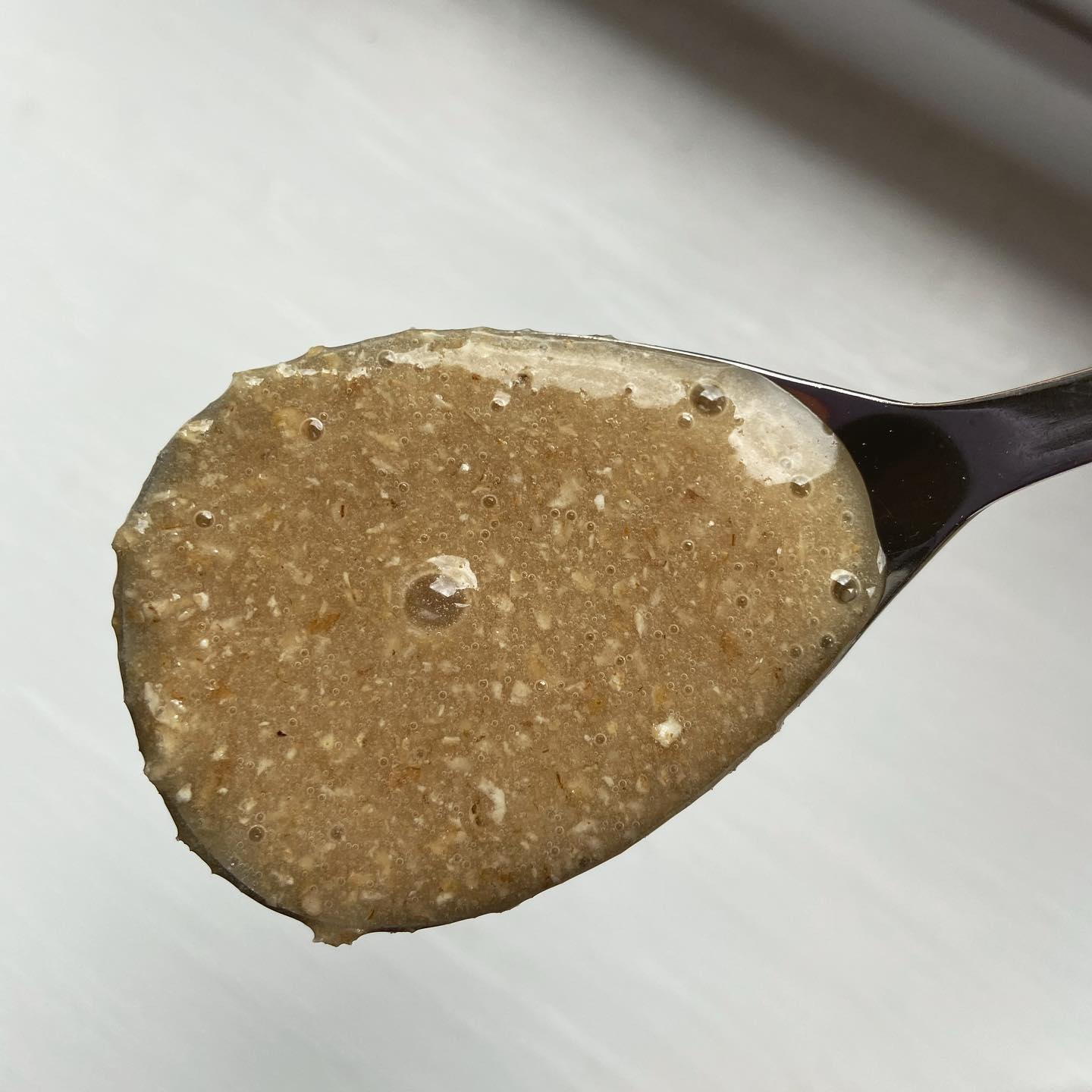
For this mask, you can either just use oats and water, or you can add honey if you want. Get 1 tablespoon of oats and either blend them or put them into a pestle and mortar, until you have a fine, flour-like texture (you can also use oat flour if you have it). Then, combine this with water until you have a smooth paste. If you are using honey, put about 2 tablespoons in with your oat flour – no water needed. For both, spread them over the face and allow to sit for 10-15 minutes. Then, wash off with hot water.

TURMERIC MASK

You may have seen this one around the internet recently, although it is really popular in countries like India, and has been for centuries. Take between half a teaspoon to a teaspoon of turmeric and mix it with 1 tablespoon of honey. Mix until it forms a thick paste and apply to the skin. Leave for 10-15 minutes and rinse off with warm water. The only issue with this mask is that it can stain the skin (like, overnight), so if it won’t come off, use a cleanser to get rid of the staining. It also can stain surfaces, so maybe don’t use anything that isn’t yours!

CUCUMBER MASK

You know in films where people have facials and they put cucumber over their eyes? Well, it’s not just for show, it’s actually because cucumber is cooling, hydrating and anti-inflammatory. For this mask, take some cucumber and blend or mash until it is chunky in consistency. Apply the mask and leave it to sit for about 15 minutes, then wash off with warm water. Obviously, the more cucumber you use, the more mask you have, so use about a quarter of a cucumber if you’re only making it for yourself.

ALMOND MASK

Almonds can exfoliate the skin which leaves it soft. For this mask, add a couple of tablespoons of ground almonds to 2 tablespoons of olive oil and mix into a paste. Leave on for 10 minutes and rinse off with warm water.

Sources:
How About… Coal?

As the vote last week on my Instagram (@wastemakeswaste) was to talk about bees, this week I’ll be discussing the other topic, which is coal. Although we are moving towards the end of the coal industry, coal is still an issue in many countries around the world, and it is still important to understand why it causes so many problems.

Coal is a black rock that is rich in carbon, releases energy when burned and has a number of problems. Alongside energy, it also releases lead, arsenic, mercury, sulfur dioxide, nitrogen oxide and particulates. In some cases, these by-products can cause asthma, heart problems, cancer, neurological disorders and brain damage. Just like burning charcoal when you have a barbecue, burning coal creates ash, which can end up in lakes and contaminate waterways. Mines are also disruptive to the environment, as they can create acid rock drainage and destruction of mountain streams.

Sadly, coal is very cheap to use, and so it became a huge part of the energy sector. A third of global electricity is generated from coal, yet coal is responsible for 46% of carbon emissions worldwide and 72% of green house gas emissions come from the electricity sector. Between 2001 and 2010, world coal consumption increased by 45%, and although a lot of countries are moving away from coal, there are still many that rely on it. On the plus side, the UK is relatively anti-coal. We have blocked construction of new power stations, and instead backed renewable energy like wind and solar power. This has helped to force investment away from coal. There are only two coal units in the UK that have not announced closure plans – Ratcliffe and West Burton. Most have announced closure or conversion plans, such as one of the most famous, Drax power station, which will close after September 2022. So yes, the age of coal is starting to end, especially in the UK, however, lots of other countries rely on coal, and some are even increasing their coal production.

So, in the UK, coal is becoming less of an issue everyday. However, you should still do your best to reduce your energy use, make sure you’re on a green energy tariff, and support organisations that lobby against coal use in other countries. Coal is just part of the story of greenhouse gases – more on that soon – so we can take comfort in this victory, and keep pushing for even more.

Sources:
Making a Bee Water Source

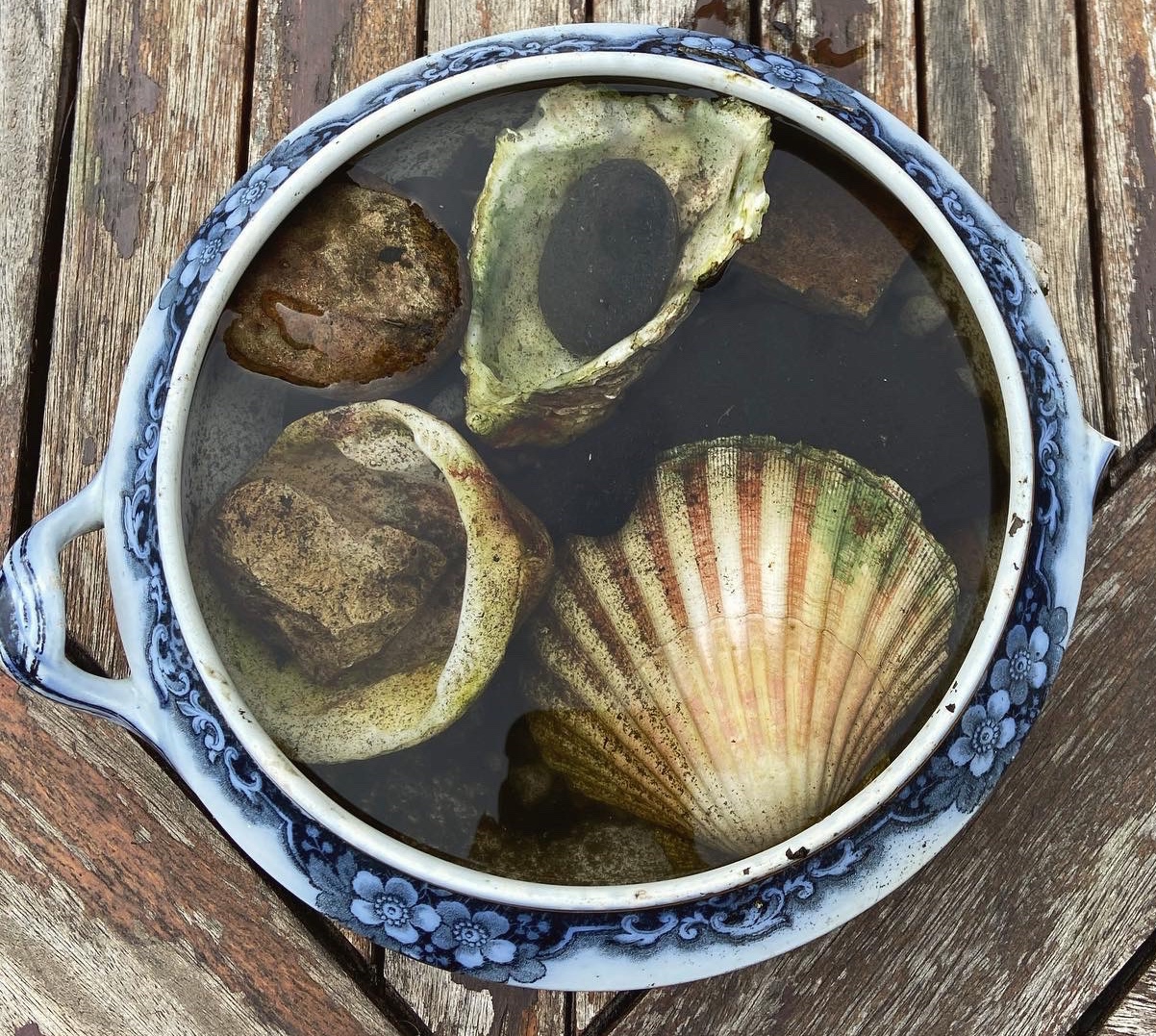
Hello! As I said in Wednesday’s post, bees are really important. One of the things you can do in your own garden is create a water source for them. Bees use these sources of water for drinking water and also to cool down their hives. It can often be quite difficult for bees to find water that is not too deep, so this is a great way of helping them. Here is how I made my water source for my garden!

You will need:

  • A container (without holes in the bottom)
  • Stones, twigs etc (I ended up using stones and shells)
  • Water

Instructions:
  • Start by grabbing your container and filling it with small stones to line the base of the container.
  • Next, place some larger stones, shells and bits of wood so that you have different levels.
  • Fill the container with water, making sure that there are plenty of places for the bees to land without falling into the water!
  • Put this somewhere that will be easy for the bees to find, and also where there are no extremes of temperature.
  • Make sure to replace the water every so often so that it is nice and clean for the bees!

That’s it for now, let me know if any of you try this diy and make sure to look at my last post for other tips on how to look after bees.

Design a site like this with WordPress.com
Get started